
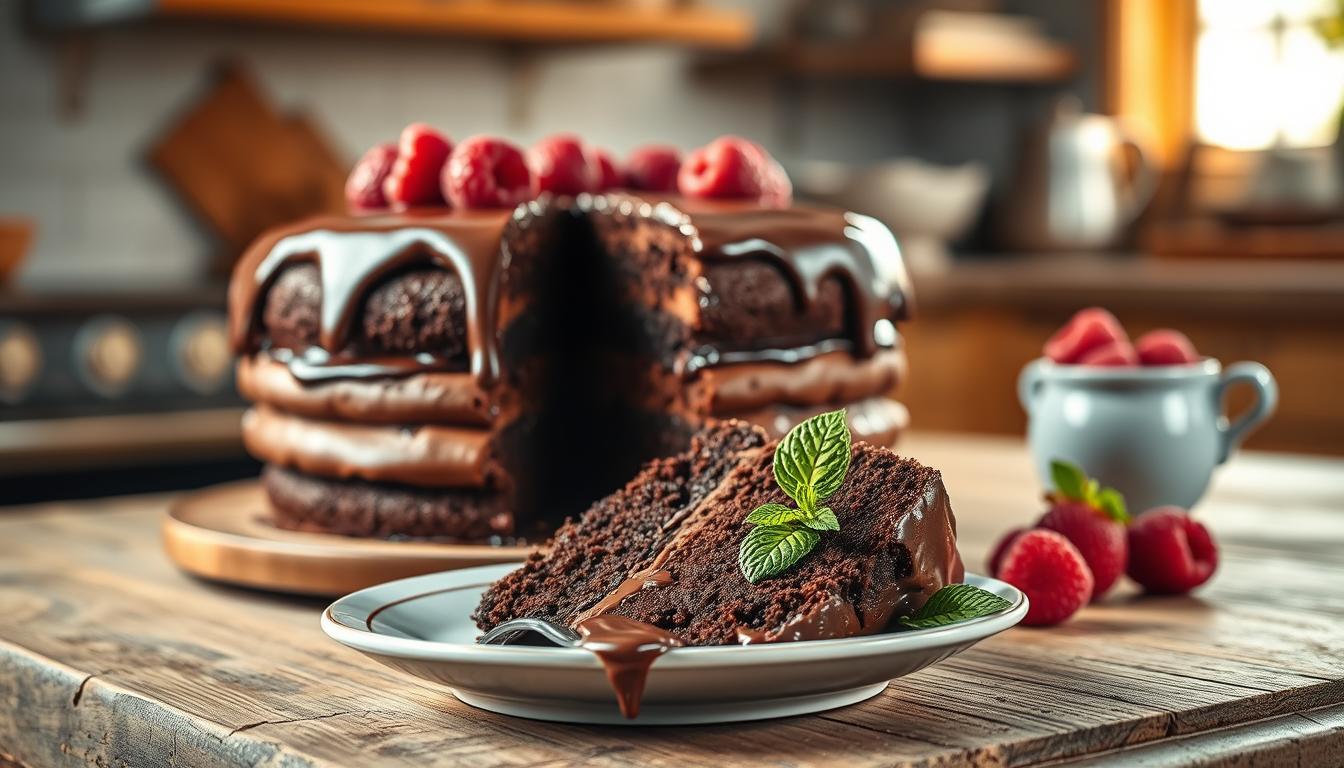
Do you remember that warm feeling when cake brings everyone together? It could be a birthday, a late-night craving, or a quiet Sunday. This recipe aims to give you that feeling every time. It’s a moist chocolate cake that stays tender for days and gets better with age.
This recipe is easy, needing just one bowl and no mixer. It uses pantry staples and tricks from the bakery. Oil makes it soft, sour cream adds richness, and hot coffee deepens the chocolate flavor. You can make a homemade cake or a quick, upgraded box-mix version.
Table of Contents
Key Takeaways
- This is a one-bowl recipe that yields an ultra moist chocolate cake with an open, tender crumb.
- Oil, sour cream, and hot coffee are the primary drivers of moisture and rich chocolate flavor.
- You can make a fully homemade cake or an upgraded box-mix version for speed and convenience.
- The cake keeps moist for over a week and often improves in flavor after a day or two.
- Recommended frosting: fudgy sour-cream chocolate ganache made with 60% dark chocolate for balance.
Why this is the best chocolate cake recipe for a super moist and rich result
This recipe is all about simplicity for amazing results. It uses a one-bowl method to save time. The mix of oil and sour cream keeps the cake moist for days.
Adding hot coffee to the batter enhances the chocolate taste. The right balance of sugar, flour, and leavening ensures the cake rises evenly. This avoids tunneling and gives a consistent texture.
It works with both Dutch-process and natural cocoa. We suggest using a scale and sifting dry ingredients. These steps make the cake look and taste professional.
What makes this recipe stand out
The mix of oil and sour cream makes the cake moist and tender. Hot coffee adds to the chocolate flavor and helps the cake stay soft.
Using high-quality cocoa and baking at the right time creates a cake that’s not too dense or too fluffy. You can also add instant pudding or extra eggs for an even richer taste. This is perfect for special occasions without extra effort.
Who this recipe is best for
Home bakers looking for bakery-quality results will love this recipe. It’s forgiving and consistent. Beginners will appreciate the simple steps and clear instructions.
For those who need to make ahead or freeze, the cake gets even better after a day. Busy cooks can easily scale up a box mix with pudding and coffee. This keeps the cake moist and pleases a crowd.
| Aspect | Why it matters | Practical tip |
|---|---|---|
| One-bowl method | Reduces cleanup and mistakes | Mix wet into dry slowly to avoid overworking |
| Oil + sour cream | Maintains moisture longer than butter alone | Use full-fat sour cream for best texture |
| Hot coffee in batter | Boosts chocolate flavor and softens crumb | Use brewed coffee or espresso for depth |
| Accurate leavening | Prevents tunneling and poor rise | Weigh ingredients and sift dry mixes |
| Cocoa choice | Alters color and flavor intensity | Choose Dutch-process for darker, rounder notes |
Chocolate Cake
This section explains what makes a good chocolate cake. It talks about the ingredients and how to keep the cake moist. You can use this info to make a homemade cake or to improve a boxed mix.
Primary ingredients and their roles
All-purpose flour is key for structure. It’s best to measure by weight to avoid dryness. Unsweetened cocoa adds flavor and color. Dutch-process options like Cacao Barry Extra Brute or Ghirardelli Majestic give a deeper taste.
Natural cocoa, such as Ghirardelli 100% or Hershey’s Unsweetened, brings a brighter taste. Granulated sugar sweetens and keeps the cake moist. Adding light brown sugar adds molasses depth and extra moisture.
A neutral oil, like canola or sunflower, keeps the cake tender. Full-fat sour cream adds richness and body. It makes the cake softer than butter alone. Large eggs provide structure and help mix ingredients.
Hot coffee or water intensifies the chocolate flavor. It also helps dissolve sugar and leavening for even baking. For frosting, dark chocolate between 50–70% cocoa is best. A 60% bar is great for a balanced ganache.
Optional and substitution notes
Buttermilk can be used to deepen flavor and activate baking soda. Use good-quality Dutch-processed cocoa like Rodelle for consistent taste. Eggs should be at room temperature for better rise.
For a quicker option, upgrade a Devil’s Food box mix. Add instant chocolate pudding, extra eggs, sour cream, warm water or coffee, oil, and chocolate chips. This mix makes a moist cake without starting from scratch.
Decaf coffee or hot water can be used if you don’t have brewed coffee. Sour cream can be swapped with full-fat Greek yogurt or crème fraîche. But don’t reduce sugar; it helps keep the cake moist.
| Ingredient | Primary Role | Recommended Options |
|---|---|---|
| All-purpose flour | Structure and crumb | Weigh for accuracy |
| Unsweetened cocoa | Chocolate flavor and color | Cacao Barry Extra Brute, Ghirardelli Majestic, Green & Black’s, Rodelle |
| Granulated + light brown sugar | Sweetness, moisture retention, molasses depth | Use portion of light brown for extra moist cake |
| Neutral oil | Tender, moist crumb | Canola, sunflower, vegetable |
| Full-fat sour cream | Dairy richness and body | Substitute: full-fat Greek yogurt or crème fraîche |
| Eggs (large) | Structure and emulsification | Room temperature for best results |
| Hot coffee or hot water | Enhances chocolate intensity; dissolves ingredients | Decaf works fine if preferred |
| Dark chocolate (for ganache) | Rich frosting base | 50–70% cocoa; 60% recommended |
| Box mix upgrade | Quick route to moist result | Devil’s Food mix + instant pudding + sour cream + extra egg + oil + chocolate chips |
Equipment and bakeware for best results
Get the right tools for a perfect easy chocolate cake every time. The right bakeware, measuring tools, and gadgets help avoid mistakes. They also make preparing your homemade chocolate cake faster and more reliable.
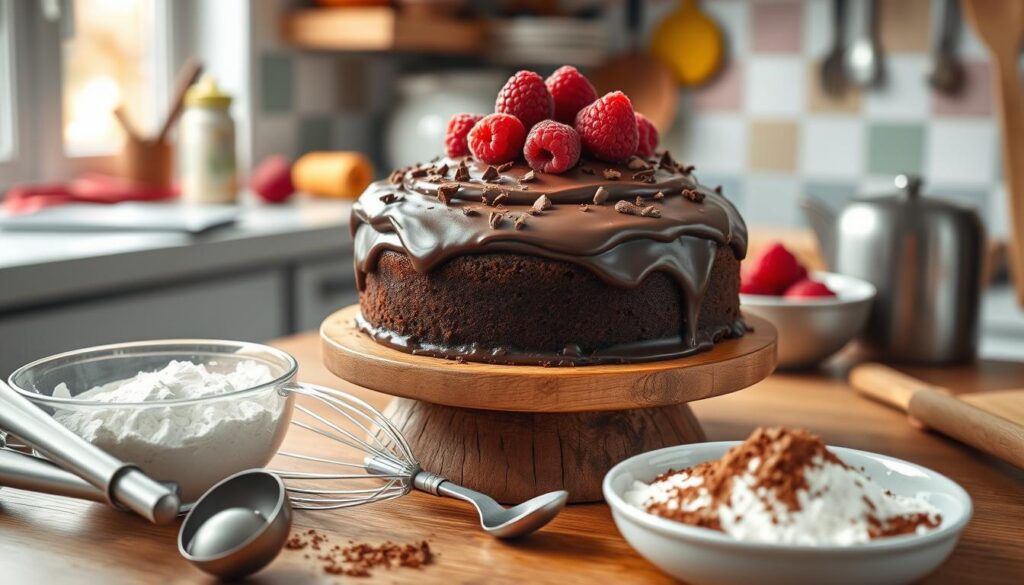
Begin with accurate measuring. A kitchen scale ensures you get the right amounts of flour, sugar, and cocoa. Use a fine-mesh sieve to remove lumps from cocoa and to evenly distribute baking powder or soda. This small step helps prevent dense spots and tunneling.
Recommended tools
Keep these on hand:
- Large mixing bowl and a sturdy whisk for hand mixing in many one-bowl recipes.
- Kitchen scale for precise dry-ingredient weights.
- Two 8-inch round pans, or swap to a 9×13 pan or cupcake tins depending on the dessert you want.
- Fine-mesh sieve/sifter for cocoa and dry blends.
- Silicone spatula for folding in chips or scraping bowls.
- Wire rack to cool layers evenly and avoid soggy bases.
- Offset spatula to spread chocolate cake with frosting smoothly.
- Oven thermometer and a reliable timer to prevent over-baking and drying.
- Stand mixer with paddle attachment for buttercream or faster box-mix upgrades.
Baking tips linked to equipment
Line pan bases with parchment for easier release and neater edges. After pouring batter, tap pans gently on the counter to release large air bubbles and reduce large holes in the crumb.
Sift cocoa and dry ingredients because cocoa tends to cling into lumps from its fat content. Sifting helps distribute leavening agents so your homemade chocolate cake rises evenly.
Use an oven thermometer to confirm true temperature. Many ovens run hot or cool. Set timers and check a few minutes before the recipe time to avoid a dry cake.
If you plan a chocolate cake with frosting, chill layers briefly on a wire rack before applying frosting. That step makes spreading with an offset spatula easier and gives cleaner decoration.
For simple chocolate cake ideas, remember that handheld beaters or a whisk will handle the cake batter, while a stand mixer speeds frosting preparation. A silicone spatula makes stirring in extras and scraping bowls effortless.
Step-by-step method to make this moist chocolate cake
Follow a clear, staged approach to build the batter and bake a reliably moist chocolate cake. These steps combine classic technique with small tricks that turn an easy chocolate cake into the best chocolate cake recipe for everyday baking and special occasions.
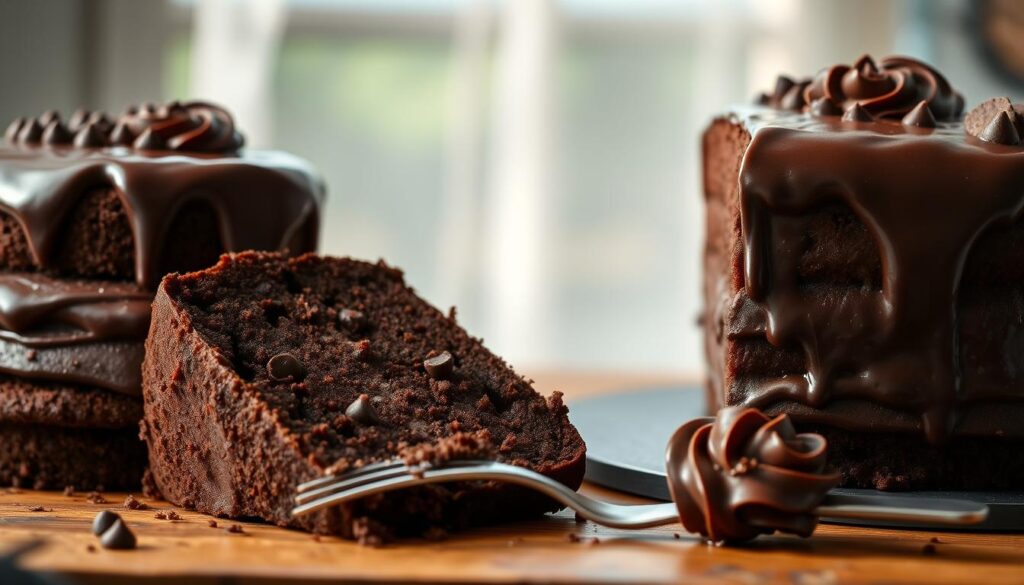
Prepare and combine dry ingredients
Preheat the oven to 350°F. Sift or whisk together all-purpose flour, unsweetened cocoa powder, baking powder, baking soda, and salt in a large bowl. This removes lumps and spreads the leavening evenly.
Add granulated sugar and packed brown sugar to the dry mix. Whisk until uniform and press any brown sugar clumps against the bowl to break them up. A consistent dry blend helps create an even crumb in your chocolate cake recipe.
Combine wet ingredients and mix batter
In a separate bowl, whisk eggs with neutral oil, sour cream or plain yogurt, and vanilla until smooth. You can mix the wet ingredients directly into the dry bowl if you prefer fewer dishes.
Fold the wet mixture into the dry mix and stir until mostly combined. The batter will be thick at this point; avoid over-mixing to prevent a tough crumb. Add hot, strong-brewed coffee in two pours while whisking gently. The heat loosens the batter and blooms the cocoa, turning the mixture glossy and fluid. This is a key step for a moist chocolate cake.
Baking and cooling
Divide batter evenly between prepared pans—two 8-inch rounds or a 9×13 pan for a single-layer sheet. Smooth tops for even rise. Bake at 350°F about 30–33 minutes for two 8-inch pans. If you use buttermilk or three thinner layers, watch for a shorter time near 25–30 minutes.
Use a toothpick to test doneness; it should come out clean or with a few moist crumbs. The cakes will spring back when lightly pressed. Cool cakes in pans for 15 minutes, then invert onto a wire rack to finish cooling completely before frosting. Allowing full cooling prevents melting and keeps your frosting stable on this easy chocolate cake.
Best frosting options for a decadent chocolate finish
Choose a frosting that matches your goal for texture and flavor. For a truly decadent chocolate cake finish, you can pick a rich ganache, a classic buttercream, or a quick store-bought shortcut. Each option pairs well with a chocolate cake with frosting and can turn the best chocolate cake recipe into a showstopper.
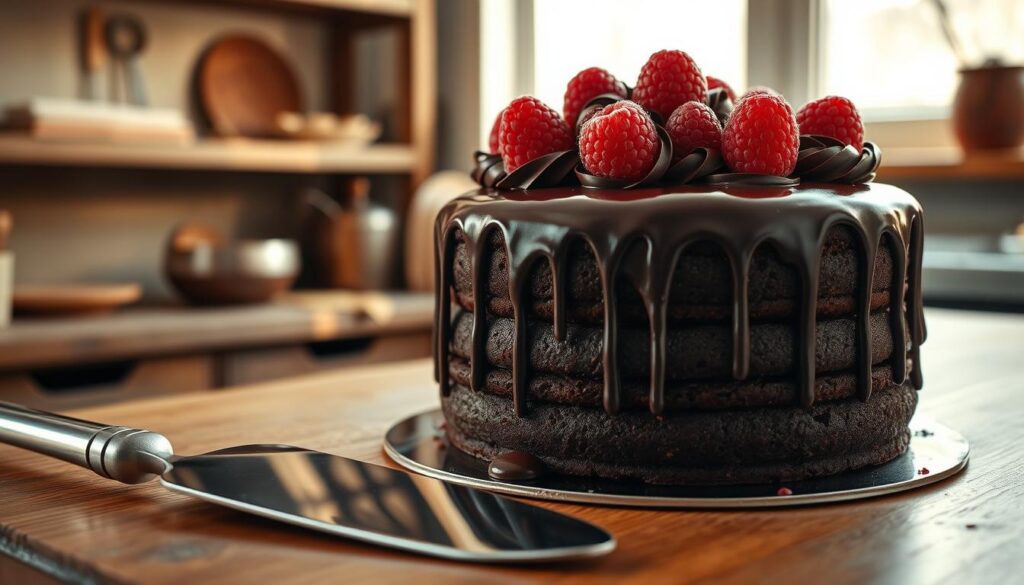
The following outlines give clear steps and tips so you can finish your cake confidently. Use the quantities from your recipe as a guide and double the frosting for heavier coverage.
Fudgy sour cream chocolate ganache (recommended)
Use dark chocolate at 60% cocoa for balance. Chop the chocolate into small pieces so it melts evenly.
Warm heavy cream until it simmers, then pour over the chocolate and let sit for one minute. Whisk gently until smooth. Stir in 2–4 tablespoons of full-fat sour cream for a tangy, dense finish. The sour cream cuts sweetness and yields a glossy, fudgy texture perfect for a decadent chocolate cake.
For deeper flavor, blend semisweet callets with a small amount of bittersweet. Cool slightly before spreading so the ganache sets with clean edges. High-quality chocolate makes a measurable difference in taste.
Classic chocolate buttercream
Cream unsalted butter until light. Add Dutch-processed cocoa, powdered sugar, warm milk or heavy cream, a touch of corn syrup and pure vanilla. Beat in a stand mixer on medium speed until fluffy and smooth. Sofi-style proportions call for a generous amount of butter and about five cups of powdered sugar for a pipable texture.
Warm milk or cream slightly to thin the frosting for spreading. Chill briefly if you need firmer peaks for piping. This buttercream keeps well at room temperature for short events and matches many chocolate cake ideas when you want a traditional look.
Quick store-bought or adapted frostings
When time is limited, one to one-and-a-half cans of high-quality store-bought chocolate icing will cover two layers. Cream cheese frosting can be used for a tangy contrast that brightens very rich cakes.
To improve jarred frostings, fold in a tablespoon of melted dark chocolate or a teaspoon of espresso powder to deepen flavor. Heat slightly to achieve an even spread. These shortcuts let you finish a chocolate cake with frosting quickly without sacrificing taste.
Common problems and how to fix them
If your cake is dry, has tunnels, or won’t rise, you can fix these issues easily. A few simple checks can help. These tips ensure your chocolate cake stays moist, whether you use a top recipe or a mix. Always use an oven thermometer, weigh your ingredients, and act quickly at each step.
Dry cake or over-baked layers
Over-baking is the main problem. Use a scale or spoon-and-level to measure flour correctly. Start checking if the cake is done a few minutes before the recipe says. A skewer should have a few moist crumbs, not dry ones.
Set a timer and check the oven temperature with a thermometer. After baking, cool the pans on a rack for 15 minutes. Then, invert them to cool completely. This prevents the cake from drying out too much.
Tunneling or large holes in the crumb
Tunnels happen when leavening is uneven or the batter is over-mixed. Sift or whisk dry ingredients to spread baking powder and soda evenly. Mix wet and dry ingredients just until combined.
Avoid too much chemical leavening. If using a mix, follow the instructions and mix gently. Overworking the batter can create big holes.
Flat cake or poor rise
Fresh baking powder and soda are key. Check their dates and store them in a cool, dry place. Weigh ingredients to keep the right ratios and mix leavening evenly.
Don’t wait to bake after mixing the batter. Baking right away helps the cake rise and set. Buttermilk in recipes adds rise and flavor. For mixes, adding pudding can make the cake moist but may take longer to bake. Keep an eye on it with a toothpick and cover with foil if it browns too quickly.
| Problem | Likely Cause | Quick Fix |
|---|---|---|
| Dry cake | Over-measured flour, over-baked, high oven temp | Weigh flour, use oven thermometer, remove when skewer shows moist crumbs |
| Tunneling/large holes | Too much leavening, uneven mix, over-mixing | Sift dry ingredients, mix gently after liquids, reduce leavening slightly |
| Flat cake | Stale leavening, delayed baking, incorrect ratios | Use fresh baking powder/soda, weigh ingredients, bake immediately after mixing |
| Box-mix specific | Add-ins like pudding change bake time | Monitor with toothpick, tent with foil to retain moisture |
Variations, serving ideas, and make-ahead tips
Make your homemade chocolate cake exciting with small changes. You can make cupcakes, a single-layer cake, or a sheet cake. The choice of cocoa affects flavor and color. For a caffeine-free cake, use decaf coffee or hot water.
Buttermilk adds a unique texture and lift. You can bake in various sizes, from 6-inch rounds to a 9×13 sheet pan. For a richer taste, use high-quality cocoa like Rodelle. A box mix can be improved with instant pudding, extra eggs, sour cream, and chocolate chips.
Serving and decoration ideas
Layer with sour-cream ganache for a glossy look or pipe buttercream for a party look. Top with chocolate shavings, nuts, and berries for contrast. Serve chilled with ganache or at room temperature for best flavor.
Storage and freezing
Keep at room temperature for days; many cakes taste better after a day. Refrigerate to keep fresh and crumb soft. Wrap tightly in plastic and foil for up to three months. Thaw while wrapped to keep moisture in.
Quick reference table for variations and results
| Variation | Pan Options | Result |
|---|---|---|
| Buttermilk version | 3×6-inch rounds, 8–9-inch layers, 9×13 pan | Brighter rise, tender crumb |
| One-bowl sheet cake | 9×13 sheet pan | Easy cut-and-serve, great for gatherings |
| Cupcake conversion | Muffin tin (about 18 cupcakes) | Portable, quick bake, party-friendly |
| Box-mix upgrade | Any standard cake pan | Fast, reliably moist, economical |
These ideas will help plan your next chocolate cake. Whether you want a show-stopper or a simple dessert, these tips ensure moist and flavorful results.
Nutrition, servings, and scaling the recipe
This section helps you plan portions and adjust quantities for an easy chocolate cake at home. It guides you on matching pan size, guest count, and dietary needs.
Yields and portion guidance
A typical two 8-inch layer chocolate cake recipe yields about 10 standard slices. You can convert the same batter to roughly 18 cupcakes when using standard liners. A 9×13 pan or two 9-inch rounds give larger or more even servings depending on how you cut them.
Some bakers report a yield near 16 servings when using slightly thinner layers. If you want smaller portions for a party, cut modest slices to increase servings without changing the recipe.
Scaling tips and ingredient adjustments
When scaling a recipe, use a kitchen scale to preserve the sugar-to-flour and liquid ratios. This affects crumb and moistness. If you double the batter, the texture holds best when every ingredient is scaled by weight.
Changing pan depth alters bake time. Deeper pans need longer in the oven. Shallow pans finish sooner. Add 5–15 minutes as a starting point and test with a toothpick or an instant-read thermometer.
If you add mix-ins such as instant pudding for a box-mix upgrade, expect longer bake times and a denser crumb. Reduce delicate add-ins like fruit or chips slightly when scaling up to avoid a gummy center.
| Pan Type | Approx. Yield | Typical Slice Size | Bake Time Adjustment |
|---|---|---|---|
| Two 8-inch rounds | 10–12 servings | Standard dessert slice | Baseline time from recipe |
| Two 9-inch rounds | 12–14 servings | Slightly smaller slices | Same to +5 minutes |
| 9×13 sheet pan | 12–16 servings | Rectangular party pieces | Shallower, -5 to -10 minutes |
| Standard cupcakes (12-cup pan) | 12 cupcakes (up to 18 with shallow fill) | Individual portions | Shorter bake, monitor closely |
Nutrition notes
A box-mix style easy chocolate cake often estimates near 360–370 kcal per serving when cut into typical slices. Calories will change with frosting, fillings, and portion size. For precise figures, enter your exact brands and quantities into a nutrition calculator.
Keep records of scaled ingredient weights when you make adjustments. That practice gives the most reliable nutrition estimates and helps you repeat success when you scale chocolate cake up or down for events.
Conclusion
This method ensures a moist and rich chocolate cake. It focuses on a few key techniques. Use oil, sour cream, or buttermilk for a tender crumb. Add hot coffee to deepen the chocolate flavor.
Choose high-quality cocoa or dark chocolate for the frosting. Measure and sift ingredients carefully. This helps the layers rise evenly and stay soft.
You can use the one-bowl method for simplicity or upgrade a box mix when time is short. Both ways yield a moist chocolate cake. Make sure to weigh ingredients, avoid over-baking, and let layers cool fully before frosting.
For a truly decadent cake, aim for a bakery-quality ganache or a fudgy sour cream chocolate finish. This locks in the richness.
Store and freeze the cake as recommended to keep it fresh for days. Try different variations like sheet cake for casual gatherings or cupcakes for portion control. Or, go for a three-layer cake for celebrations.
Use these ideas to match your pantry, schedule, and occasion. Enjoy the result: the best chocolate cake recipe. It balances convenience with deep, chocolate-forward flavor.