
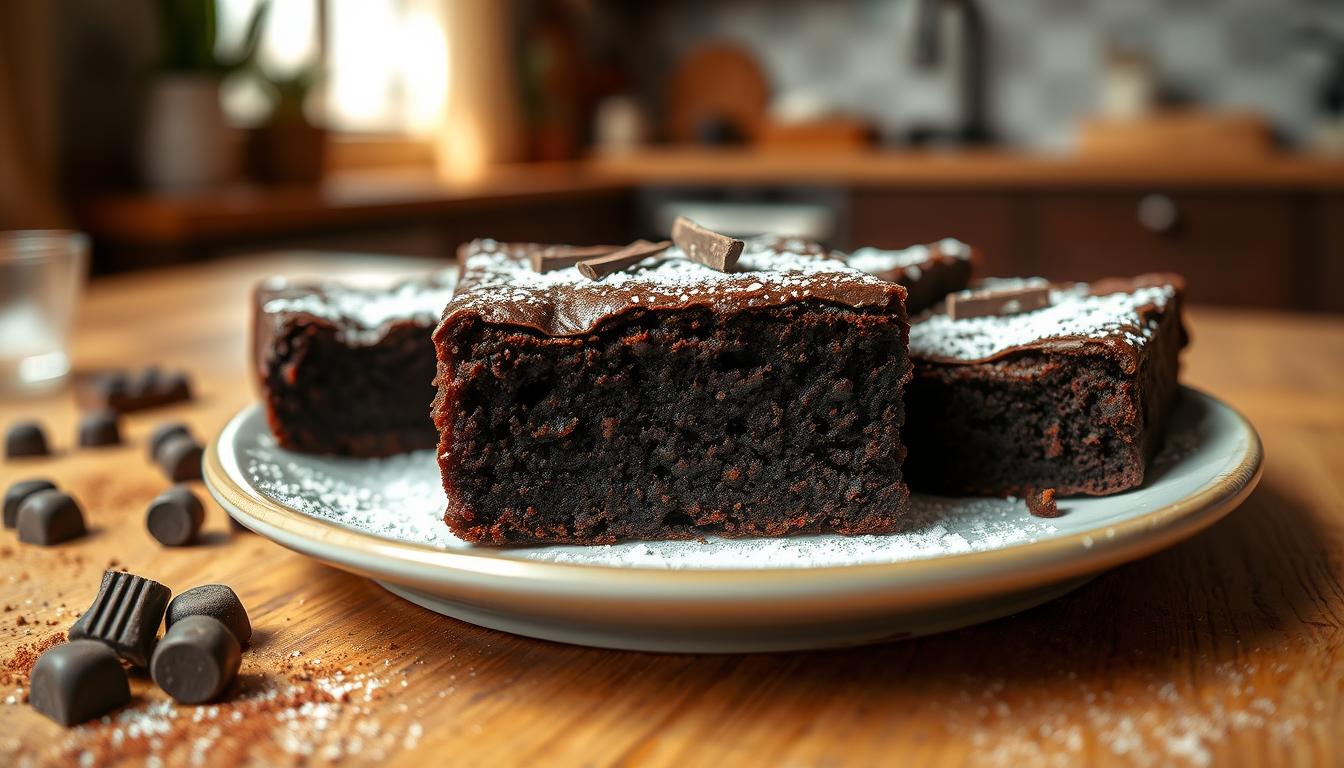
Remember that moment when a warm brownie comes out of the oven? It wobbles in the middle, promising a gooey treat. This recipe brings back that feeling of rich, chocolatey comfort. It’s homemade, beats boxed mixes, and is easy enough for any day.
This recipe is perfect for those who love deep chocolate without the hassle. It uses mostly one saucepan, making cleanup easy. The method is inspired by Alice Medrich and adapted for everyday baking. You can even add melted chocolate for an extra rich taste.
The recipe makes sixteen brownies in an 8-inch square pan. Double the recipe for a 9×13 pan, but the brownies will be thinner. You’ll find precise measurements, a clear saucepan method, and tips for baking and storing these decadent treats.
Table of Contents
Key Takeaways
- This easy brownie recipe focuses on deep chocolate flavor with minimal cleanup.
- Mostly made in one saucepan; optional melted chocolate for extra richness.
- Yields 16 brownies in an 8-inch pan; double for larger pans but expect thinner bars.
- Expect gooey centers and a shiny, crackly top when baked to the right doneness.
- The guide includes full ingredient weights, step-by-step method, and storage tips.
Why these are the best homemade fudgy chocolate brownies
These brownies are special because you get to decide everything. You pick the chocolate, butter, and sugar. This makes them perfect for any occasion, whether it’s a big gathering or a cozy night in.
What makes them better than boxed mixes
Using real butter and top-notch chocolate like Ghirardelli or Hershey’s makes them taste better. Adding sugar to the warm fat and water mixture gives them a shiny top. You can also add brown sugar for a unique flavor.
Using a mix of cocoa powder and melted chocolate ensures they stay fudgy. Boxed mixes can’t compete with this.
Texture and flavor profile
The goal is a soft center and chewy edges. The top should be thin and crackly. Natural cocoa adds a bright chocolate taste, while Dutch-process cocoa gives a deeper flavor.
For an even richer taste, use dark chocolate. Keep the flour amount low to keep them moist and dense.
Reader-tested and highly rated
Many people have made these brownies and loved them. They get high ratings and lots of praise for their fudgy texture. Some like them sweeter or thicker, but the basic recipe is a hit.
| Technique | Effect on Texture | Recommended Ingredient |
|---|---|---|
| Dissolve sugar in warm fat | Shiny crackly top, less greasy layers | Granulated sugar |
| Use melted bittersweet chocolate | Deep chocolate depth, fudgy center | 60–70% dark chocolate |
| Minimal flour | Dense, moist crumb | All-purpose flour, measured by spoon-and-level |
| Vigorous mixing/emulsifying | Stable batter, prevents separation | Whisk or spatula until glossy |
| Choice of cocoa | Bright vs. mellow flavor | Natural cocoa or Dutch-process |
Ingredients for rich and easy brownies
Choosing the right ingredients is key to making great brownies. Here, you’ll find the basics, chocolate options, and add-ins for fudgy brownies. You can adjust these to make your brownies moist or chewy.
Essential pantry ingredients
Start with 100% butter for flavor and texture. If your butter is salted, reduce the salt you add. Use granulated sugar for a shiny top.
For an 8×8 pan, use about 1/2 cup of all-purpose flour. Two cold eggs work best for melting in a saucepan. For more chocolate, use three room-temperature eggs. Add vanilla extract and fine sea salt, about 1/4–1/2 teaspoon.
Chocolate and cocoa options
Choose between cocoa powder or melted chocolate. Natural cocoa gives a bright chocolate taste. Dutch-process cocoa has a smoother, roasted flavor.
Use high-quality brands like Ghirardelli, Guittard, Lindt, or Rodelle for cocoa or baking chocolate. For melted chocolate, 60–70% bittersweet bars are best. Couverture callets make your brownies glossy and rich.
Optional add-ins and swaps
Mix-ins can change the texture and taste. Walnuts and pecans add crunch. Chocolate chips, white chocolate, or extra chopped bittersweet chocolate create triple-chocolate layers. Brown sugar adds depth but can affect the top.
For dietary swaps, try Bob’s Red Mill gluten-free flour blends. Use butter instead of vegetable oil for a fudgy texture. Weigh ingredients when possible or use the spoon-and-level method for flour and cocoa.
Small changes can affect the thickness. Add 1–2 tablespoons of flour to thicken. But don’t cut sugar too much, or your brownies might not be as moist or have a shiny crust.
Essential equipment and pan choices
Choosing the right gear is key to making the best brownie recipe. A few smart tools can save time, reduce mistakes, and make your brownies look like they came from a bakery.
Best pans for even baking
Light metal 8-inch square pans are great for even heat. They ensure your brownies bake well from edge to center. For thicker brownies or more of them, use a 9×13 pan. Just remember to bake them a bit longer and check them early.
Ceramic and glass pans can change how long you bake. They might brown the edges faster. So, check your brownies about five minutes before the recipe says. Use a toothpick or skewer to test if they’re done without overbaking.
Tools that make cutting and serving easier
Line your pan with parchment paper that goes over the edges. This makes it easy to lift out your brownies. Use metal binder clips to keep the parchment in place while you pour in the batter.
For clean slices, use a long, thin knife like a santoku or chef’s knife. Heat the knife under hot water, then wipe it dry. Make each cut with a smooth pull. Heat the knife again between cuts for sharp, glossy edges.
Small tools and optional gadgets
Have a small offset spatula for smoothing batter and a rubber spatula for folding. A wooden spoon is handy for mixing batter in a saucepan. A wire rack helps cool your brownies quickly, so they don’t get too hard.
Use a kitchen scale for precise measurements in your easy brownie recipe. Optional tools include a pouring saucepan for melting butter and sugar, an oven thermometer for exact temperatures, silicone liners for easy release, and a timer to avoid overbaking.
Step-by-step method for the easiest fudgy brownies
Follow a clear, short method to make these decadent brownies. They have a glossy crust and a dense, fudgy center. Read each step before you begin so your oven time and texture match your goal for the best brownie recipe.
Make batter in the saucepan
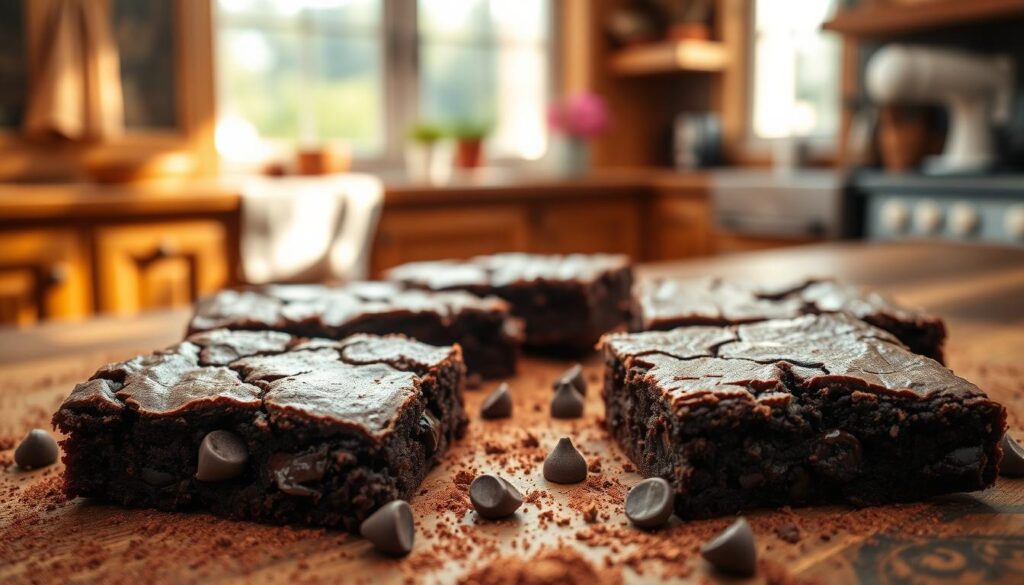
Melt unsalted butter in a heavy stainless steel saucepan over low heat. Do not brown the butter. Stir in granulated sugar and whisk about 30 seconds until fully incorporated; this hot butter and sugar step helps form a shiny crackly top on your easy brownie recipe. Whisk in cocoa powder and a pinch of salt until smooth. Let the mixture cool a few minutes if your eggs are cold.
Incorporate eggs and vanilla
Add eggs one at a time, whisking vigorously after each addition until the batter turns thick, glossy, and slightly tightened. You can use two room-temperature eggs or one whole egg plus an extra yolk to enrich texture. Stir in vanilla extract. Warming eggs slightly before adding helps sugar dissolve and supports the shiny crust that many bakers prize in fudgy chocolate brownies.
Add dry ingredients and fold
Spoon-and-level or weigh your flour. If you sift cocoa with flour, do it now. Add a small amount of flour—typically about 1/2 cup for an 8-inch pan—and fold gently with a rubber spatula until no streaks remain. Some bakers use a vigorous wooden spoon motion here to emulsify fat and reduce greasiness, but avoid overmixing so you do not develop excess gluten. Fold in chocolate chips or chopped nuts just until combined for extra decadence.
Transfer and bake
Scrape batter into a prepared parchment-lined 8-inch square pan and smooth the top with an offset spatula. Scatter extra chips or a light sprinkle of flaky sea salt if you like. Choose a temperature for your texture: 325°F for low-and-slow fudginess, or 350°F for a quicker bake with a firm edge. Bake 20–32 minutes depending on oven and pan. Test doneness with a skewer or toothpick; pull the pan when a few moist, sticky crumbs cling but no wet batter remains. Let brownies cool in the pan; they will set as they cool to create the best brownie recipe texture.
| Step | Key action | Why it matters |
|---|---|---|
| 1. Melt butter & mix sugar | Low heat, whisk 30 sec | Creates shiny top and even sugar distribution |
| 2. Add cocoa & cool | Whisk until smooth, cool briefly | Prevents cooking eggs when added |
| 3. Whisk in eggs & vanilla | One at a time, vigorous whisk | Builds glossy, tightened batter for fudgy chocolate brownies |
| 4. Fold in flour | Gently fold until no streaks | Keeps crumb tender and avoids toughness |
| 5. Add mix-ins | Fold just until combined | Prevents overmixing, preserves texture |
| 6. Bake | 325–350°F, 20–32 min | Choose temperature for desired fudginess in decadent brownies |
Timing and temperature tips to achieve fudgy, gooey centers
Getting the timing and temperature right is key to making fudgy chocolate brownies. Use a lower oven setting for thicker batters. This helps protect the center while the edges set. Watch the bake closely near the end; small adjustments in minutes change texture a lot.
Optimal oven temperature
Set your oven to 325°F when using an 8-inch pan for the best texture. This temperature ensures even heat. It helps you achieve gooey brownies without overbaking the edges.
Use 350°F for a quicker bake in a thin pan. But reduce time to avoid dry edges. If baking in glass or ceramic, check a few minutes early. Metal pans hold heat differently, so stick to the times on the recipe for metal unless you test and adjust.
How to test doneness
Insert a toothpick or thin skewer into the center near the end of the bake. Pull it out and look for a few moist, sticky crumbs clinging to the pick. This tells you the center will stay moist after cooling.
If the pick comes out clean, the brownies are likely overbaked and will be drier. If wet batter clings, give them 2–4 more minutes and check again. Visual cues help: set edges that pull slightly from the pan and a glossy, slightly underdone center are signs you nailed moist chocolate brownies.
Cooling and chilling for extra fudginess
Cool completely in the pan on a wire rack to let structure set. Cooling at room temperature improves sliceability while preserving a fudgy interior for the best brownie recipe results.
For an even denser, fudgier texture, refrigerate for 1–2 hours or overnight. Chilling firms the centers and makes clean slices easier. If you used parchment overhang, lift the slab from the pan before chilling and bring to room temperature briefly before serving if you prefer softer gooey brownies.
Variations for decadent brownies and chewy brownies
You can change the texture and flavor of your brownies without starting over. Small changes can make a big difference. Try adding more flour for thick, fudgy brownies or use a different method for chewy ones. Start with a small batch to see what works best in your oven.
Thick fudgy brownies
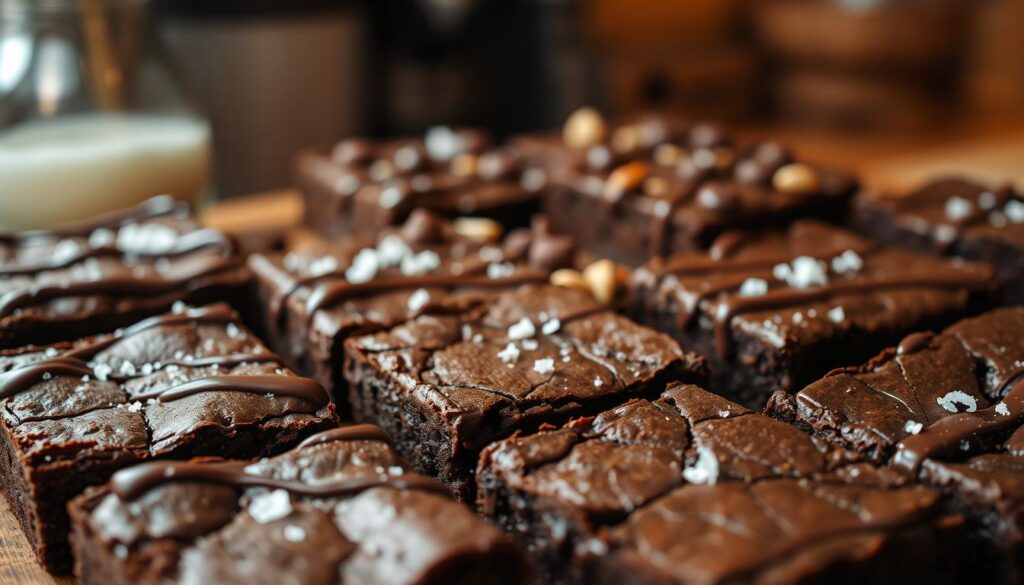
To make thick, fudgy brownies, add 1–2 tablespoons of extra flour. This extra flour helps the brownies rise and makes them feel more substantial.
Keep an eye on the baking time. Too much flour can dry out the brownies if they’re overbaked. So, bake them a bit less and check with a toothpick for moistness.
Triple chocolate and mix-in versions
For triple chocolate brownies, mix semisweet, milk, and white chocolate. Try adding 1/4 cup each of milk and dark chocolate chips, plus 3 oz of chopped white chocolate for a rich taste.
Use a one-bowl method with cocoa powder and chocolate chips for deeper flavor. Sprinkle extra chips or flaky sea salt on top before baking for extra texture and flavor.
Chewy versus fudgy adjustments
Fudgy brownies use melted chocolate and less dry ingredients. This gives them a dense, gooey texture.
Chewy brownies have a bit more butter and sugar, with cocoa powder as the main chocolate. Bake them a bit longer for chewier edges. Avoid using leaveners to keep them moist.
| Variation | Key Change | Target Texture | Baking Tip |
|---|---|---|---|
| Thick fudgy brownies | +1–2 tbsp flour | Higher, dense | Reduce bake time; test center early |
| Triple chocolate brownies | Mix semisweet, milk, white | Ultra-rich, layered chocolate | Sprinkle chips/salt on top before baking |
| Chewy brownies | More butter; cocoa powder focus | Chewy edges, firmer bite | Bake slightly longer; skip leaveners |
Common mistakes and how to avoid dry or greasy brownies
Even the most skilled bakers can make mistakes. Small errors in timing, measurements, or mixing can ruin the texture. Here are some quick tips to help you avoid dry or greasy brownies and achieve moist, fudgy ones every time.
Don’t overbake
Overbaking is the main culprit behind dry brownies. Start checking your brownies at the earlier end of the recommended baking time. This is usually 25–28 minutes, depending on the pan size. Use a skewer to check; it should have moist, sticky crumbs, not a clean stick.
Remember, brownies continue to cook as they cool. So, take them out a bit sooner to prevent dryness.
Measure ingredients accurately
Accuracy is key when baking. Use a kitchen scale for the best results. If you must use cups, use the spoon-and-level method for flour and cocoa. This prevents packing and ensures the right amount of dry ingredients.
Too much flour or cocoa can dry out the batter. Too much butter can make the top greasy. Stick to the grams listed in the recipe for precise measurements.
Mixing pitfalls
The way you mix ingredients affects the texture and shine of your brownies. Dissolve sugar into warm butter or whisk it into eggs for a glossy crust. If sugar remains grainy, your top will be dull and your crumb denser.
After adding flour, fold gently to avoid developing gluten and getting cakier results. If the batter looks separated or greasy, a few firm folds with a wooden spoon can fix it. Avoid adding baking powder or baking soda unless the recipe specifies it, as they can change the texture of your brownies.
By following these guidelines, you can avoid dry brownies and achieve the moist, fudgy chocolate brownies that make a recipe truly great.
Storage, reheating, and freezing for make-ahead brownies
Plan ahead to keep your fudgy chocolate brownies fresh. A few easy steps make them perfect for parties, school lunches, or a late-night treat.
Short-term storage
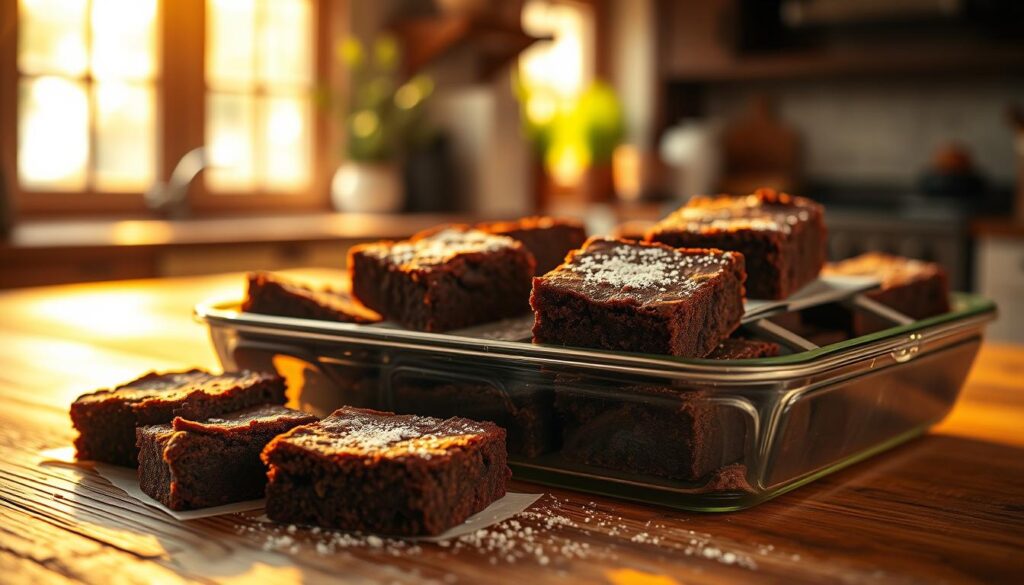
Once cooled, store brownies in an airtight container at room temperature for 2–3 days. Use parchment layers to prevent sticking and keep the crust shiny. This method keeps the center moist and edges crispy.
Refrigeration and freezing
For longer storage, refrigerate in a sealed container for up to two weeks. To freeze, wrap portions in plastic wrap, then foil, and store for up to three months. Freezing individual pieces makes for easy single-serve portions.
Thaw frozen brownies in the fridge overnight to avoid crust moisture. Let them come to room temperature before enjoying for the best texture.
Reheating tips
To warm a chilled or frozen brownie, microwave it for 10–15 seconds. This brings back the gooey center. For oven reheating, warm at 300°F for a few minutes. Top with vanilla ice cream or a quick ganache for a special treat.
Tips from experienced bakers for perfect shiny crust and clean slices
Getting a glossy, crackly top and tidy cuts takes small, deliberate steps. Below you’ll find practical techniques used by bakers at Cook’s Illustrated and Serious Eats. These tips boost flavor and texture in your fudgy chocolate brownies.
How to get a shiny, crackly top
Dissolve sugar into the wet phase. Use room-temperature eggs so sugar dissolves more readily when you whisk by hand. Vigorously whisking eggs and sugar creates a thin, glossy membrane that becomes the shiny crust.
Alternately, melt butter and sugar together briefly in a stainless steel saucepan. Then stir in warm chocolate to encourage sugar dissolution and glossy formation.
Techniques for neat slicing
Line your pan with parchment overhang to lift the baked slab out intact. Cool completely on a rack, then chill 30–60 minutes for firmer cutting. This helps you achieve neat brownie slices without smudging the crust.
Use a long, thin-bladed knife. Run the blade under hot water, dry it, and make a single smooth stroke. Wipe the blade between cuts to keep edges clean and avoid tugging the crust.
Ingredient and technique tweaks readers love
Choose bittersweet chocolate for depth and Dutch-process cocoa for mellow richness. This makes the best brownie recipe with real chocolate character. Sprinkle flaky sea salt on top right after baking to lift flavor and enhance contrast.
For extra fudginess, chill your brownies before slicing. Many bakers favor a stainless steel pouring saucepan to melt butter, mix sugar, and stir in cocoa and chocolate for one-pan convenience. These adjustments protect the shiny crust brownies while maximizing moist, fudgy chocolate brownies and tidy, neat brownie slices.
| Tip | Why it works | Quick action |
|---|---|---|
| Whisk eggs and sugar by hand | Creates stable foam and microcrystals that form a glossy crust | Whisk 1–2 minutes until thick and pale |
| Melt butter with sugar in a saucepan | Helps sugar dissolve and produces a shiny top when mixed with chocolate | Warm gently until sugar grains are mostly dissolved |
| Use room-temperature eggs | Speeds sugar dissolution and promotes a better crust | Bring eggs to room temp 30 minutes before baking |
| Chill before slicing | Firms crumb and preserves clean edges for neat brownie slices | Refrigerate 30–60 minutes after cooling |
| Hot-water knife method | Melts surface crumbs and yields smooth cuts | Dip knife in hot water, dry, then cut; repeat per slice |
| Finish with flaky sea salt | Brightens chocolate flavor and highlights texture | Sprinkle immediately after baking while warm |
Conclusion
Make fudgy chocolate brownies by using the one-saucepan or gentle melted-chocolate methods. Choose quality cocoa or chocolate and measure carefully. Watch the bake time to get shiny tops and gooey centers.
Use real butter and fully dissolve the sugar. Avoid overbaking. Test with a skewer for moist crumbs, not raw batter. These steps make a reliable easy brownie recipe into the best one you’ll make again and again.
Feel free to try variations like triple chocolate or thicker fudgy bars. Add-ins like walnuts or dark chocolate chips enhance the texture. Follow the oven and pan tips for consistent results and decadent brownies every time.
For cleaner slices and firmer fudginess, chill before cutting. Use the recommended slicing techniques. Store and reheat as suggested to keep texture and flavor. Try the recipe, adapt it to your taste, and enjoy homemade brownies that are richer and more satisfying than boxed mixes.