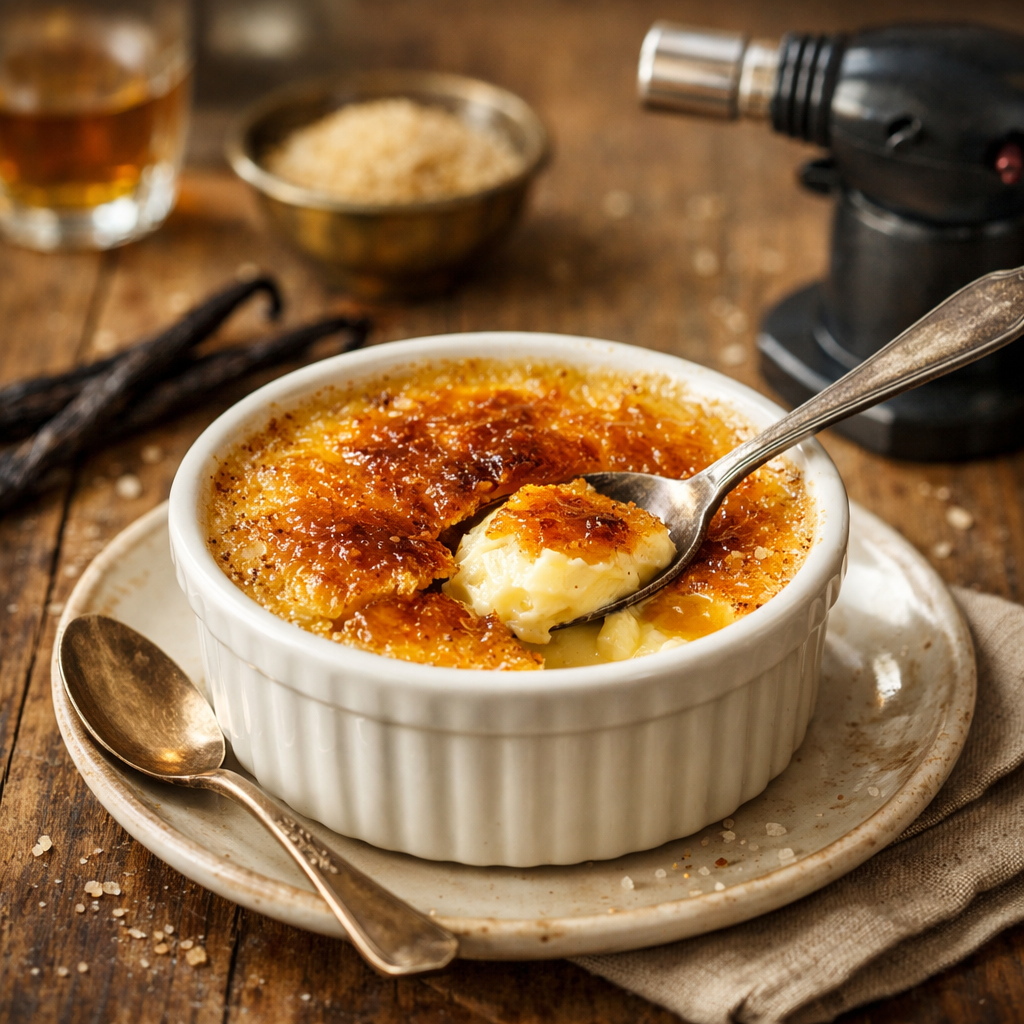
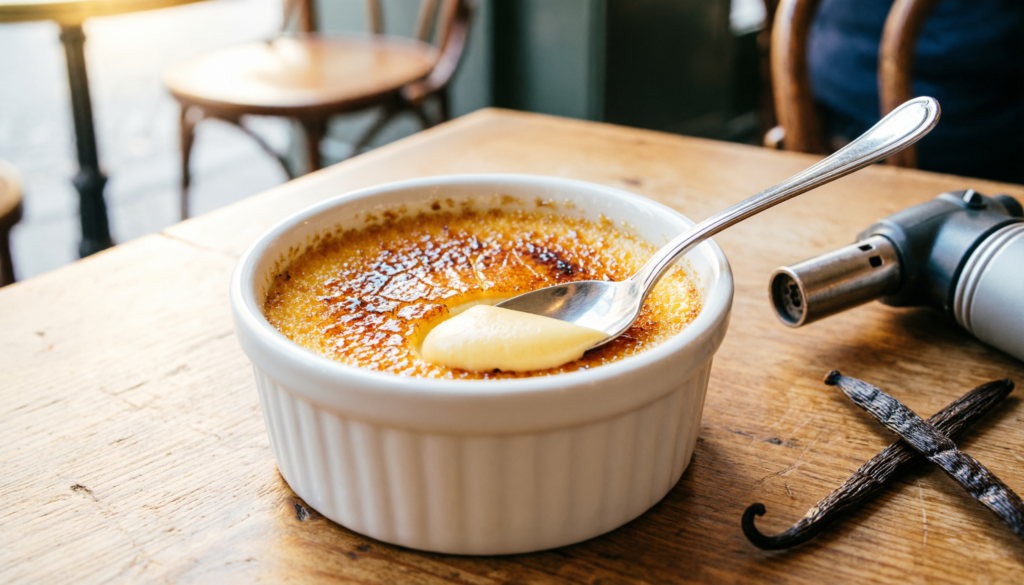
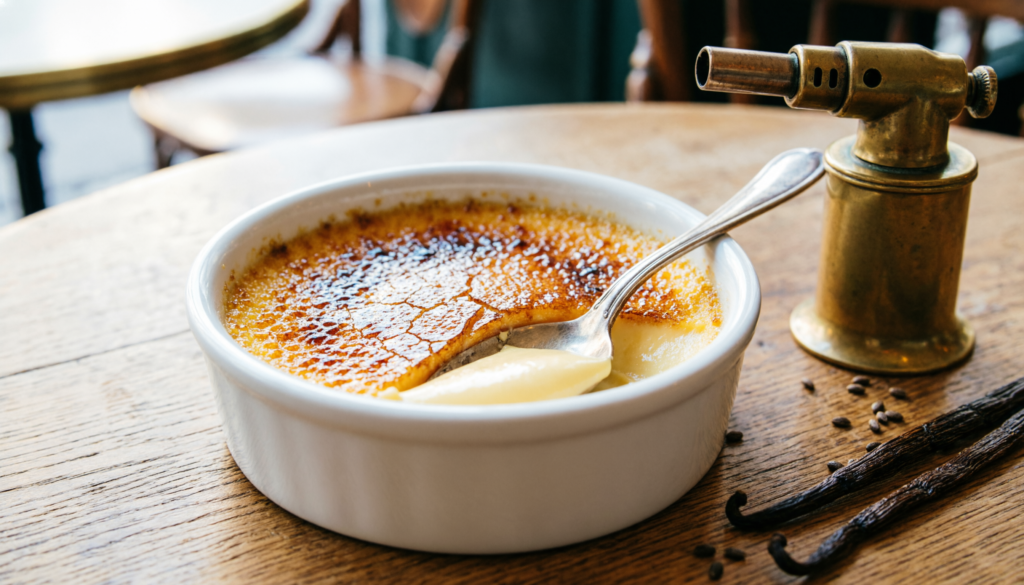
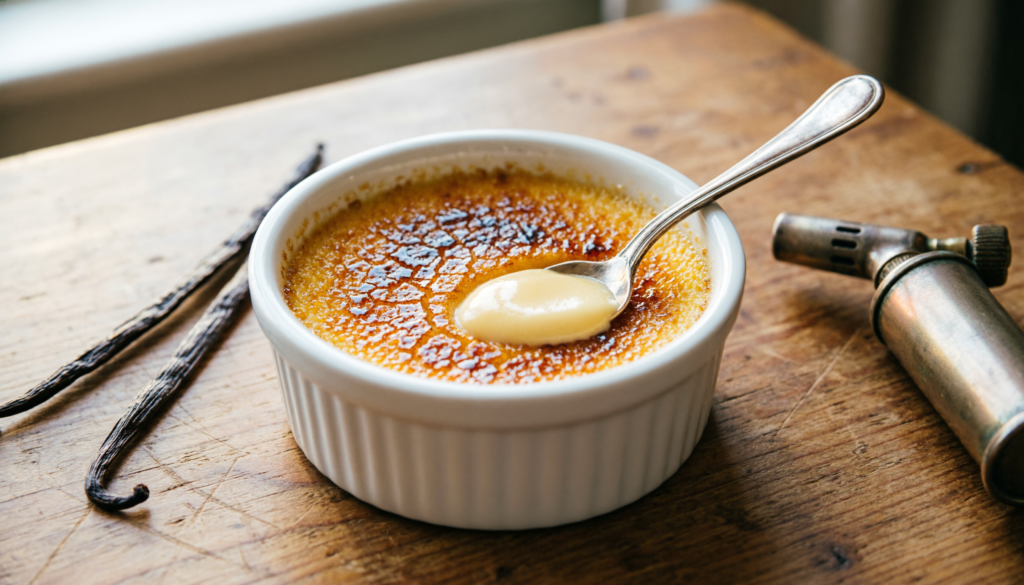
Have you ever tapped a dessert and a crunchy top breaks to reveal smoothness? That’s the magic of crème brûlée. It’s a French treat that’s both lavish and personal. It’s ideal for a cozy dinner or a fancy evening out.
Crème brûlée, or krem-broo-lay, is a simple yet rich dessert. It has a creamy vanilla custard topped with a crunchy sugar shell. The mix of crunchy sugar and soft custard is its main charm. Once you learn about crème brûlée, making it becomes easy.
Creating a top-notch crème brûlée at home is easy with basic ingredients and tools. You can use a torch or broiler to caramelize the sugar. This dessert adds a touch of class to any meal, yet it’s easy for anyone to make.
Table of Contents
Key Takeaways
Crème brûlée is a classic French dessert featuring a rich vanilla custard topped with caramelized sugar.
The defining experience is the crack of the brittle sugar over a smooth, creamy center.
A true classic recipe uses minimal ingredients and simple tools like ramekins and a torch or broiler.
It’s elegant enough for guests but easy enough for home cooks to master.
Understanding what is crème brûlée helps you nail texture and flavor every time.
What crème brûlée means and its French origin
The name tells the story. When you ask about crème brûlée meaning, you learn that the phrase is a direct nod to its burnt sugar topping. It’s not about scorched custard. Instead, it’s a smooth custard topped with a thin, glassy layer of caramel.
Crème brûlée is pronounced “krem-broo-lay.” This shows its strong French origin and ties to classical pâtisserie techniques. You’ll find it on menus from Paris bistros to New York restaurants. Its elegant presentation and simple ingredients make it a favorite.
Looking into culinary history gives context. The dish is a traditional treat served as a finishing course at dinner parties and formal meals. Chefs like Julia Child and media figures such as Martha Stewart have shown its place in American dining. This has boosted its cultural popularity.
The sensory pull matters. The satisfying crack of the caramelized top, the contrast between crisp sugar and creamy custard, and the ease of adapting flavors have made it a beloved dessert worldwide.
Aspect
What you should know
Literal meaning
Burnt cream translation clarifies the name refers to caramelized sugar, not scorched custard.
Pronunciation
“krem-broo-lay” reflects French origin and classical technique.
Culinary role
A traditional treat served as a classic finishing course in restaurants and homes.
Influence
Featured by chefs and food media, boosting cultural popularity in the U.S. and beyond.
Appeal
Textural contrast and adaptability make it a go-to dessert for many occasions.
Key ingredients for a classic recipe
To make a silky custard, you need a few quality items. Start with the core components for the authentic texture and flavor every time.
Five staple ingredients
Classic crème brûlée needs five ingredients found in any well-stocked market. You’ll need 2 cups of heavy whipping cream, 5 large egg yolks, and 1/2 cup of granulated sugar. Don’t forget extra sugar for the topping, a pinch of fine sea salt, and one teaspoon of vanilla extract or vanilla bean seeds.
Each ingredient has a special role. Heavy whipping cream adds fat for body. Egg yolks thicken and enrich the custard. Sugar sweetens and creates the caramelized top. Salt enhances flavors, and vanilla adds the signature aroma.
Substitutions and dietary considerations
For dairy-free, use full-fat coconut milk or coconut cream instead of heavy whipping cream. Avoid lower-fat milks for a silky set.
For vanilla, one teaspoon of extract is equal to the seeds from one vanilla bean or one teaspoon of vanilla bean paste. Always choose real vanilla for the best flavor.
Ingredient
Purpose
Common Substitutions
Heavy whipping cream
Provides fat for smooth texture and mouthfeel
Full-fat coconut milk, coconut cream
Egg yolks
Thickens and stabilizes the custard
Egg yolk replacers are unreliable; use only for strict allergies
Sugar (plus sugar topping)
Sweetens and enables caramelized crust
Cane sugar alternatives may work for sweetness but not for caramel
Vanilla bean / extract
Provides aromatic signature
Vanilla bean paste or pure vanilla extract
Fine sea salt
Balances sweetness and enhances flavor
Regular table salt, use sparingly
Essential equipment: ramekins, torch, and water bath
You need reliable tools for a smooth custard and that perfect crisp sugar topping. The right equipment makes the classic recipe easy and stress-free. Whether baking for guests or yourself, it’s all about the tools.
crème brûlée
Ramekins and baking dishes
Use individual 4-oz to 6-oz ramekins for single-serve portions. These sizes help the custard set evenly and make presentation simple.
Place the ramekins in a larger baking dish or casserole to create a water bath. A proper water bath keeps heat gentle and steady so the custard stays silky.
Blowtorch (blow torch) vs. broiler
A handheld culinary torch is the preferred tool for caramelizing sugar to a deep amber and creating the iconic crack. Retail butane torches from Home Depot or Williams Sonoma give you control when finishing the sugar topping.
Broiling can work as an alternative if you protect chilled custards and watch closely. Professional cooks like Martha Stewart note broiler use is acceptable but less consistent than a torch.
Weigh this trade-off when you consider speed, consistency, and torch safety in your kitchen routine.
Other useful tools
Strain the custard through a fine-mesh sieve for a silken texture. Use an oven thermometer to confirm oven temperature and a kitchen thermometer to check custard doneness.
A wire rack helps cooling, measuring cups and spoons ensure accuracy, and a silicone spatula makes scraping jars simple. Some cooks chill ramekins briefly in the freezer before using the torch to help protect the custard while you caramelize.
Step-by-step classic crème brûlée method
Begin with a clear plan to make your classic recipe silky and balanced. This guide will help you from warming cream to chilling, with tips for a flawless texture.
Warming the cream and infusing vanilla
Heat heavy cream in a saucepan over medium heat until it steams but doesn’t boil. For the best flavor, split a Madagascar vanilla bean, scrape the seeds, and add both seeds and pod to the hot cream.
If using vanilla extract or paste, remove the cream from the heat. Stir in the extract. Let it steep for 10–20 minutes to enhance the aroma before straining.
Preparing the custard base
Whisk egg yolks with granulated sugar and a pinch of salt until smooth. Add the warmed cream slowly while whisking constantly to avoid cooking the eggs.
Pass the custard through a fine-mesh sieve into a pouring vessel. This step removes solids and makes the custard base silky and uniform.
Baking in a water bath
Preheat the oven to about 325°F. Divide the strained custard into ramekins and place them in a 9×13-inch roasting pan.
Carefully pour boiling water into the pan until it reaches halfway up the ramekins. Bake 4‑oz custards for roughly 30–35 minutes. They should be nearly set but slightly wobbly.
Cooling and chilling
Remove ramekins from the water bath and cool them to room temperature on a wire rack. Cover them lightly and refrigerate for at least 2 hours.
For the best results, chill up to 3 days before serving. Wait until just before serving to add the sugar topping to prevent the custard from softening.
Step
Key action
Timing
Warming cream
Heat until steaming; steep vanilla bean 10–20 min
15–25 minutes
Custard base
Whisk yolks with sugar; temper with hot cream; strain
10–15 minutes
Water bath baking
Bake ramekins in boiling water at ~325°F until centers wobble
30–50 minutes (size dependent)
Cooling & chilling
Cool to room temp, then refrigerate; add sugar topping later
2 hours to 3 days
How to caramelize the sugar topping for the iconic crack
Getting a glossy, crisp caramelized sugar topping makes crème brûlée memorable. You can achieve the classic brittle crack with a simple sugar application, safe torch techniques, or the broiler method. Read on for clear, practical steps that fit home kitchens.
crème brûlée
Choosing and applying the sugar
Use plain granulated sugar for an even, glassy crust. Measure about 1½–2 teaspoons per ramekin. Sprinkle the sugar in a thin, even layer, then gently tilt or swirl the custard so the crystals spread across the surface.
You may try light brown sugar to add a deeper flavor. Expect a slightly softer top. For the classic brittle crack and best caramelized sugar topping, stick with granulated sugar and steady sugar application.
Using a torch safely and effectively
Hold a small handheld butane culinary torch a few inches above the sugar. Keep the flame moving in steady circular motions until the sugar melts, bubbles, and turns deep amber. Use short bursts to avoid overheating the custard.
Follow the manufacturer instructions and practice blowtorch safety: check for leaks, point the flame away from flammable items, keep a fire-safe surface nearby, and have a damp cloth available. Avoid directing the flame at the ramekin rim to prevent cracking.
Broiler method and alternatives
If you lack a torch, use the broiler method. Preheat the broiler and place ramekins on a baking sheet under high heat until the sugar melts and caramelizes. Chill the ramekins briefly before broiling to reduce warming of the custard.
The broiler method can be less consistent than torch techniques. For no-heat alternatives, top with fresh berries, citrus segments, berry sauces, caramel sauce, or shaved bittersweet chocolate when you prefer not to caramelize sugar.
Variations and flavor ideas for creamy dessert lovers
Explore new territory with the classic custard. These ideas add a twist to your dessert menu. You can keep it simple or go bold with flavors that surprise guests.
Vanilla-forward and bean-scraped recipes
For a restaurant-quality finish, scrape vanilla seeds into warm cream. This gives a deep aroma to your vanilla bean crème brûlée. It keeps the custard silky and pure.
Vanilla bean paste is great for consistency. Use high-quality vanilla for the best results. This way, the custard can shine on its own.
Seasonal and flavored variations
Change the cream to match the season. In fall, add pumpkin and warm spices. In winter, use orange zest or Grand Marnier for a citrus twist. Summer is perfect for lemon or berry-infused creams.
Try espresso or chocolate for richer flavors. An espresso-infused custard pairs well with dark chocolate. These choices cater to different tastes and occasions.
Presentation and garnishes
Presentation is key when serving desserts. Use color and texture contrast for visual appeal. Fresh raspberries, mint, or orange segments brighten the pale custard.
Here are some garnish ideas for a polished finish:
Mixed berries with a mint leaf for a fresh contrast.
Drizzled caramel or butterscotch for richness.
Shaved bittersweet chocolate to echo cocoa notes.
Variation
Main Flavor Additions
Best Garnishes
Vanilla-forward
Scraped vanilla bean or vanilla paste
Light dusting of powdered sugar, vanilla pod
Pumpkin spice
Pumpkin purée, cinnamon, nutmeg
Toasted pepitas, cinnamon stick
Espresso
Strong espresso or instant finely dissolved
Chocolate shavings, espresso beans
Citrus
Orange or lemon zest, a splash of liqueur
Thin citrus segments, candied zest
Berry
Pureed strawberries, raspberries, or blueberries
Fresh mixed berries, mint leaf
Timing, make-ahead tips, and storage
Plan your timing to let the custard develop flavor and firm up gently. You can bake and prepare custards up to three days before serving. Cool them on the counter, cover, and then refrigerate.
This makes service smooth and lets you focus on presentation when guests arrive.
Make-ahead strategy
When making crème brûlée ahead, bake the custards fully and cool them to room temperature within two hours. Cover each ramekin loosely with plastic wrap without pressing it onto the surface. Wait until right before serving to sprinkle and torch the sugar for a crisp caramel.
Refrigeration and shelf life
For the best shelf life, store covered custards in the fridge for up to three days. Proper storage prevents off-odors and keeps the texture smooth. Make sure your fridge stays at or below 40°F to protect quality.
Freezing guidance
Freezing crème brûlée is an option when you need convenience. Bake without the sugar topping, cool, then wrap ramekins tightly in plastic wrap and foil. Freeze for up to one month.
Thaw frozen custards overnight in the refrigerator before adding sugar and torching. Expect a slight change in texture after freezing, but you’ll have a pleasing dessert when timing is tight.
Common problems and how to fix them
Small mistakes can ruin a great crème brûlée. Here are fixes for common issues like custard texture and topping troubles. Read these tips before your next bake to avoid problems and serve a perfect dessert.
crème brûlée
Overbaked or grainy custard
Overbaked custard is firm and loses its silkiness. To prevent this, bake in a water bath at the right temperature. Remove ramekins when they have a slight wobble in the center.
If you have grainy custard, serve it in smaller portions with a sauce or whipped cream. This can hide the texture. Next time, slowly add eggs to warm cream and strain the mixture before baking to avoid curdling.
Cracked or soggy topping
A cracked topping often results from uneven sugar or too much heat when torching. Spread sugar evenly and move the flame in circles to create a uniform crust. This crust should crack when tapped.
Soggy topping usually comes from moisture in the fridge. To avoid this, add and torch the sugar just before serving. If the crust softens in the fridge, reheat it with a torch or under a hot broiler for a few moments to crisp it again.
Safety and torch troubleshooting
Start with safe handling when torching. Work on a fire-safe surface and keep the torch moving to avoid flare-ups and overheating the custard below the sugar.
If you don’t have a culinary torch or feel uneasy using one, try the broiler method. Chill the custards well before broiling and watch closely to prevent warming the custard while browning the sugar.
Why crème brûlée remains a beloved traditional treat
The moment the spoon taps the sugar shell, you know why crème brûlée is loved. The crisp top gives way to a silky custard, a delightful surprise. This is why so many enjoy this dessert.
Textural contrast is key. The crunchy caramel and the smooth custard inside offer a unique experience. This mix of textures makes the dessert unforgettable.
It’s easy to serve one portion at a time. You can add flavors like citrus or lavender without losing its elegance. This makes it perfect for both casual and fancy gatherings.
Chefs at top places like The French Laundry and Le Bernardin use it to show off their skills. People expect a great custard, which shows the chef’s talent. Martha Stewart has also helped make it famous in France and the U.S.
It’s great for parties because you can make the custard ahead and finish it at the table. The torching adds a touch of drama. It’s a simple yet impressive choice for hosts who want to impress.
Conclusion
Classic crème brûlée is a simple yet elegant French dessert. It requires quality ingredients and precise technique. By following the steps, you create a rich, silky custard base.
The sugar topping is the dessert’s crowning glory. Apply it just before serving and use a small culinary torch for a perfect caramelized crust. If you don’t have a torch, a broiler can work if you keep the dishes cold and watch closely.
Plan ahead to make the custard a day before and refrigerate it. Then, torch it at service. You can also add simple variations like espresso, orange zest, or pumpkin to suit any season or menu. With practice, you’ll achieve restaurant-quality results and a dessert that’s both elegant and satisfying.
FAQ
What is crème brûlée?
Crème brûlée is a French dessert with a rich custard base and a caramelized sugar top. It’s known for its smooth custard and crunchy sugar topping. You can make it at home with just a few ingredients and basic tools.
What does crème brûlée mean and where does it come from?
Crème brûlée means “burnt cream” in English. It comes from France and is a classic dessert. It’s loved for its elegant simplicity and can be made at home with ease.
What is the definition and literal translation of the name?
The name crème brûlée means “burnt cream.” It refers to the caramelized sugar on top, not the cream. The cream stays smooth and creamy.
What is the historical and cultural context of crème brûlée?
Crème brûlée is a traditional French dessert. It’s known for its elegant presentation and simplicity. It’s a favorite in restaurants and dinner parties.
What are the key ingredients for a classic crème brûlée?
A classic crème brûlée needs heavy whipping cream, egg yolks, sugar, a pinch of salt, and vanilla. These ingredients make the custard silky and the sugar topping crispy.
What substitutions or dietary considerations should I know?
For dairy-free versions, use coconut milk or cream. Lower-fat milks won’t work as well. Always use real vanilla for the best flavor. If you’re watching your sugar intake, skip the sugar topping or use alternative sweeteners carefully.
What ramekins and baking dishes should I use?
Use 4‑oz to 6‑oz ramekins for single servings. Place them in a larger dish with boiling water to cook evenly. This method prevents curdling or overcooking.
Should I use a blowtorch or the broiler to caramelize the top?
A handheld butane torch is best for caramelizing sugar evenly. It gives consistent results. Broiling can work, but it’s less reliable and may warm the custard too much.
What other tools are useful for making crème brûlée?
You’ll need a fine-mesh sieve, oven thermometer, wire rack, measuring cups, and a silicone spatula. Chilling ramekins briefly before caramelizing helps protect the custard.
How do you warm the cream and infuse vanilla?
Heat the cream until it’s steaming, then remove it from heat and add vanilla. For the best flavor, scrape vanilla seeds into the cream and steep the pod while it cools slightly.
What is the method for preparing the custard base?
Whisk egg yolks with sugar and salt until blended. Temper the yolks with hot cream gradually. Strain the mixture to remove solids for a smooth custard.
How do you bake crème brûlée in a water bath?
Preheat the oven to 325°F. Place ramekins in a larger dish and add boiling water halfway up. Bake for 30–35 minutes for 4‑oz ramekins. Custards are done when they’re nearly set.
How long should crème brûlée cool and chill?
Cool ramekins to room temperature, then refrigerate for at least 2 hours. For best texture, add and caramelize the sugar topping just before serving.
How do you choose and apply the sugar topping for the iconic crack?
Use granulated sugar for a classic caramel crust. Sprinkle about 1½–2 teaspoons over each chilled custard and swirl to distribute. Light brown sugar can add deeper flavor, but granulated sugar produces the signature brittle crack.
How do you use a torch safely and effectively?
Hold the torch a few inches above the sugar and move in circular motions until it’s deep amber. Use short bursts and keep the flame moving. Work over a fire-safe surface and have a damp cloth nearby.
What if I don’t have a torch — how does the broiler method work?
Preheat the broiler and place chilled ramekins on a baking sheet. Caramelize the sugar until it’s golden brown. Chill ramekins in the freezer before broiling to protect the custard.
What are vanilla-forward or bean-scraped recipes?
Vanilla-forward recipes use real vanilla seeds or vanilla bean paste for intense flavor. Scraping and steeping the bean yields a speckled, aromatic custard often favored for restaurant-quality crème brûlée.
What seasonal or flavored variations can I try?
Try espresso, pumpkin, citrus, or chocolate-infused crème brûlée. Add espresso, pumpkin, citrus zest, or liqueurs to the cream for seasonal specialties and variations.
What presentation and garnish ideas?
Garnish with fresh raspberries, mixed berries, citrus segments, or shaved chocolate. Garnishes add color and complementary flavors, making the dessert visually appealing.
How far in advance can I make crème brûlée?
Prepare and bake custards up to three days in advance. Cool, cover, and refrigerate them. Add and caramelize the sugar topping just before serving for the best texture.
How should crème brûlée be stored and what is its shelf life?
Cool custards to room temperature, then cover tightly and refrigerate for up to 3 days. Keep the sugar topping off until serving to preserve the crisp crust.
Can I freeze crème brûlée?
Freezing is possible but may slightly alter texture. Bake without the sugar topping, cool, then wrap ramekins tightly in plastic wrap and foil. Freeze up to one month. Thaw in the refrigerator before adding sugar and torching.
What if I don’t have a torch — how does the broiler method work?
Preheat the broiler and place chilled ramekins on a baking sheet. Caramelize the sugar until it’s golden brown. Chill ramekins in the freezer before broiling to protect the custard.
What are vanilla-forward or bean-scraped recipes?
Vanilla-forward recipes use real vanilla seeds or vanilla bean paste for intense flavor. Scraping and steeping the bean yields a speckled, aromatic custard often favored for restaurant-quality crème brûlée.
What seasonal or flavored variations can I try?
Try espresso, pumpkin, citrus, or chocolate-infused crème brûlée. Add espresso, pumpkin, citrus zest, or liqueurs to the cream for seasonal specialties and variations.
What presentation and garnish ideas?
Garnish with fresh raspberries, mixed berries, citrus segments, or shaved chocolate. Garnishes add color and complementary flavors, making the dessert visually appealing.
How far in advance can I make crème brûlée?
Prepare and bake custards up to three days in advance. Cool, cover, and refrigerate them. Add and caramelize the sugar topping just before serving for the best texture.
How should crème brûlée be stored and what is its shelf life?
Cool custards to room temperature, then cover tightly and refrigerate for up to 3 days. Keep the sugar topping off until serving to preserve the crisp crust.
Can I freeze crème brûlée?
Freezing is possible but may slightly alter texture. Bake without the sugar topping, cool, then wrap ramekins tightly in plastic wrap and foil. Freeze up to one month. Thaw in the refrigerator before adding sugar and torching.
What if I don’t have a torch — how does the broiler method work?
Preheat the broiler and place chilled ramekins on a baking sheet. Caramelize the sugar until it’s golden brown. Chill ramekins in the freezer before broiling to protect the custard.
What are vanilla-forward or bean-scraped recipes?
Vanilla-forward recipes use real vanilla seeds or vanilla bean paste for intense flavor. Scraping and steeping the bean yields a speckled, aromatic custard often favored for restaurant-quality crème brûlée.
What seasonal or flavored variations can I try?
Try espresso, pumpkin, citrus, or chocolate-infused crème brûlée. Add espresso, pumpkin, citrus zest, or liqueurs to the cream for seasonal specialties and variations.
What presentation and garnish ideas?
Garnish with fresh raspberries, mixed berries, citrus segments, or shaved chocolate. Garnishes add color and complementary flavors, making the dessert visually appealing.
How far in advance can I make crème brûlée?
Prepare and bake custards up to three days in advance. Cool, cover, and refrigerate them. Add and caramelize the sugar topping just before serving for the best texture.
How should crème brûlée be stored and what is its shelf life?
Cool custards to room temperature, then cover tightly and refrigerate for up to 3 days. Keep the sugar topping off until serving to preserve the crisp crust.
Can I freeze crème brûlée?
Freezing is possible but may slightly alter texture. Bake without the sugar topping, cool, then wrap ramekins tightly in plastic wrap and foil. Freeze up to one month. Thaw in the refrigerator before adding sugar and torching.
What if I don’t have a torch — how does the broiler method work?
Preheat the broiler and place chilled ramekins on a baking sheet. Caramelize the sugar until it’s golden brown. Chill ramekins in the freezer before broiling to protect the custard.
What are vanilla-forward or bean-scraped recipes?
Vanilla-forward recipes use real vanilla seeds or vanilla bean paste for intense flavor. Scraping and steeping the bean yields a speckled, aromatic custard often favored for restaurant-quality crème brûlée.
What seasonal or flavored variations can I try?
Try espresso, pumpkin, citrus, or chocolate-infused crème brûlée. Add espresso, pumpkin, citrus zest, or liqueurs to the cream for seasonal specialties and variations.
What presentation and garnish ideas?
Garnish with fresh raspberries, mixed berries, citrus segments, or shaved chocolate. Garnishes add color and complementary flavors, making the dessert visually appealing.
How far in advance can I make crème brûlée?
Prepare and bake custards up to three days in advance. Cool, cover, and refrigerate them. Add and caramelize the sugar topping just before serving for the best texture.
How should crème brûlée be stored and what is its shelf life?
Cool custards to room temperature, then cover tightly and refrigerate for up to 3 days. Keep the sugar topping off until serving to preserve the crisp crust.
Can I freeze crème brûlée?
Freezing is possible but may slightly alter texture. Bake without the sugar topping, cool, then wrap ramekins tightly in plastic wrap and foil. Freeze up to one month. Thaw in the refrigerator before adding sugar and torching.
What if I don’t have a torch — how does the broiler method work?
Preheat the broiler and place chilled ramekins on a baking sheet. Caramelize the sugar until it’s golden brown. Chill ramekins in the freezer before broiling to protect the custard.
What are vanilla-forward or bean-scraped recipes?
Vanilla-forward recipes use real vanilla seeds or vanilla bean paste for intense flavor. Scraping and steeping the bean yields a speckled, aromatic custard often favored for restaurant-quality crème brûlée.
What seasonal or flavored variations can I try?
Try espresso, pumpkin, citrus, or chocolate-infused crème brûlée. Add espresso, pumpkin, citrus zest, or liqueurs to the cream for seasonal specialties and variations.
What presentation and garnish ideas?
Garnish with fresh raspberries, mixed berries, citrus segments, or shaved chocolate. Garnishes add color and complementary flavors, making the dessert visually appealing.
How far in advance can I make crème brûlée?
Prepare and bake custards up to three days in advance. Cool, cover, and refrigerate them. Add and caramelize the sugar topping just before serving for the best texture.
How should crème brûlée be stored and what is its shelf life?
Cool custards to room temperature, then cover tightly and refrigerate for up to 3 days. Keep the sugar topping off until serving to preserve the crisp crust.
Can I freeze crème brûlée?
Freezing is possible but may slightly alter texture. Bake without the sugar topping, cool, then wrap ramekins tightly in plastic wrap and foil. Freeze up to one month. Thaw in the refrigerator before adding sugar and torching.
What if I don’t have a torch — how does the broiler method work?
Preheat the broiler and place chilled ramekins on a baking sheet. Caramelize the sugar until it’s golden brown. Chill ramekins in the freezer before broiling to protect the custard.
What are vanilla-forward or bean-scraped recipes?
Vanilla-forward recipes use real vanilla seeds or vanilla bean paste for intense flavor. Scraping and steeping the bean yields a speckled, aromatic custard often favored for restaurant-quality crème brûlée.
What seasonal or flavored variations can I try?
Try espresso, pumpkin, citrus, or chocolate-infused crème brûlée. Add espresso, pumpkin, citrus zest, or liqueurs to the cream for seasonal specialties and variations.
What presentation and garnish ideas?
Garnish with fresh raspberries, mixed berries, citrus segments, or shaved chocolate. Garnishes add color and complementary flavors, making the dessert visually appealing.
How far in advance can I make crème brûlée?
Prepare and bake custards up to three days in advance. Cool, cover, and refrigerate them. Add and caramelize the sugar topping just before serving for the best texture.
How should crème brûlée be stored and what is its shelf life?
Cool custards to room temperature, then cover tightly and refrigerate for up to 3 days. Keep the sugar topping off until serving to preserve the crisp crust.
Can I freeze crème brûlée?
Freezing is possible but may slightly alter texture. Bake without the sugar topping, cool, then wrap ramekins tightly in plastic wrap and foil. Freeze up to one month. Thaw in the refrigerator before adding sugar and torching.
What if I don’t have a torch — how does the broiler method work?
Preheat the broiler and place chilled ramekins on a baking sheet. Caramelize the sugar until it’s golden brown. Chill ramekins in the freezer before broiling to protect the custard.
What are vanilla-forward or bean-scraped recipes?
Vanilla-forward recipes use real vanilla seeds or vanilla bean paste for intense flavor. Scraping and steeping the bean yields a speckled, aromatic custard often favored for restaurant-quality crème brûlée.
What seasonal or flavored variations can I try?
Try espresso, pumpkin, citrus, or chocolate-infused crème brûlée. Add espresso, pumpkin, citrus zest, or liqueurs to the cream for seasonal specialties and variations.
What presentation and garnish ideas?
Garnish with fresh raspberries, mixed berries, citrus segments, or shaved chocolate. Garnishes add color and complementary flavors, making the dessert visually appealing.
How far in advance can I make crème brûlée?
Prepare and bake custards up to three days in advance. Cool, cover, and refrigerate them. Add and caramelize the sugar topping just before serving for the best texture.
How should crème brûlée be stored and what is its shelf life?
Cool custards to room temperature, then cover tightly and refrigerate for up to 3 days. Keep the sugar topping off until serving to preserve the crisp crust.
Can I freeze crème brûlée?
Freezing is possible but may slightly alter texture. Bake without the sugar topping, cool, then wrap ramekins tightly in plastic wrap and foil. Freeze up to one month. Thaw in the refrigerator before adding sugar and torching.
What if I don’t have a torch — how does the broiler method work?
Preheat the broiler and place chilled ramekins on a baking sheet. Caramelize the sugar until it’s golden brown. Chill ramekins in the freezer before broiling to protect the custard.
What are vanilla-forward or bean-scraped recipes?
Vanilla-forward recipes use real vanilla seeds or vanilla bean paste for intense flavor. Scraping and steeping the bean yields a speckled, aromatic custard often favored for restaurant-quality crème brûlée.
What seasonal or flavored variations can I try?
Try espresso, pumpkin, citrus, or chocolate-infused crème brûlée. Add espresso, pumpkin, citrus zest, or liqueurs to the cream for seasonal specialties and variations.
What presentation and garnish ideas?
Garnish with fresh raspberries, mixed berries, citrus segments, or shaved chocolate. Garnishes add color and complementary flavors, making the dessert visually appealing.
How far in advance can I make crème brûlée?
Prepare and bake custards up to three days in advance. Cool, cover, and refrigerate them. Add and caramelize the sugar topping just before serving for the best texture.
How should crème brûlée be stored and what is its shelf life?
Cool custards to room temperature, then cover tightly and refrigerate for up to 3 days. Keep the sugar topping off until serving to preserve the crisp crust.
Can I freeze crème brûlée?
Freezing is possible but may slightly alter texture. Bake without the sugar topping, cool, then wrap ramekins tightly in plastic wrap and foil. Freeze up to one month. Thaw in the refrigerator before adding sugar and torching.
What if I don’t have a torch — how does the broiler method work?
Preheat the broiler and place chilled ramekins on a baking sheet. Caramelize the sugar until it’s golden brown. Chill ramekins in the freezer before broiling to protect the custard.
What are vanilla-forward or bean-scraped recipes?
Vanilla-forward recipes use real vanilla seeds or vanilla bean paste for intense flavor. Scraping and steeping the bean yields a speckled, aromatic custard often favored for restaurant-quality crème brûlée.
What seasonal or flavored variations can I try?
Try espresso, pumpkin, citrus, or chocolate-infused crème brûlée. Add espresso, pumpkin, citrus zest, or liqueurs to the cream for seasonal specialties and variations.
What presentation and garnish ideas?
Garnish with fresh raspberries, mixed berries, citrus segments, or shaved chocolate. Garnishes add color and complementary flavors, making the dessert visually appealing.
How far in advance can I make crème brûlée?
Prepare and bake custards up to three days in advance. Cool, cover, and refrigerate them. Add and caramelize the sugar topping just before serving for the best texture.
How should crème brûlée be stored and what is its shelf life?
Cool custards to room temperature, then cover tightly and refrigerate for up to 3 days. Keep the sugar topping off until serving to preserve the crisp crust.
Can I freeze crème brûlée?
Freezing is possible but may slightly alter texture. Bake without the sugar topping, cool, then wrap ramekins tightly in plastic wrap and foil. Freeze up to one month. Thaw in the refrigerator before adding sugar and torching.
What if I don’t have a torch — how does the broiler method work?
Preheat the broiler and place chilled ramekins on a baking sheet. Caramelize the sugar until it’s golden brown. Chill ramekins in the freezer before broiling to protect the custard.
What are vanilla-forward or bean-scraped recipes?
Vanilla-forward recipes use real vanilla seeds or vanilla bean paste for intense flavor. Scraping and steeping the bean yields a speckled, aromatic custard often favored for restaurant-quality crème brûlée.
What seasonal or flavored variations can I try?
Try espresso, pumpkin, citrus, or chocolate-infused crème brûlée. Add espresso, pumpkin, citrus zest, or liqueurs to the cream for seasonal specialties and variations.
What presentation and garnish ideas?
Garnish with fresh raspberries, mixed berries, citrus segments, or shaved chocolate. Garnishes add color and complementary flavors, making the dessert visually appealing.
How far in advance can I make crème brûlée?
Prepare and bake custards up to three days in advance. Cool, cover, and refrigerate them. Add and caramelize the sugar topping just before serving for the best texture.
How should crème brûlée be stored and what is its shelf life?
Cool custards to room temperature, then cover tightly and refrigerate for up to 3 days. Keep the sugar topping off until serving to preserve the crisp crust.
Can I freeze crème brûlée?
Freezing is possible but may slightly alter texture. Bake without the sugar topping, cool, then wrap ramekins tightly in plastic wrap and foil. Freeze up to one month. Thaw in the refrigerator before adding sugar and torching.
What if I don’t have a torch — how does the broiler method work?
Preheat the broiler and place chilled ramekins on a baking sheet. Caramelize the sugar until it’s golden brown. Chill ramekins in the freezer before broiling to protect the custard.
What are vanilla-forward or bean-scraped recipes?
Vanilla-forward recipes use real vanilla seeds or vanilla bean paste for intense flavor. Scraping and steeping the bean yields a speckled, aromatic custard often favored for restaurant-quality crème brûlée.
What seasonal or flavored variations can I try?
Try espresso, pumpkin, citrus, or chocolate-infused crème brûlée. Add espresso, pumpkin, citrus zest, or liqueurs to the cream for seasonal specialties and variations.
What presentation and garnish ideas?
Garnish with fresh raspberries, mixed berries, citrus segments, or shaved chocolate. Garnishes add color and complementary flavors, making the dessert visually appealing.
How far in advance can I make crème brûlée?
Prepare and bake custards up to three days in advance. Cool, cover, and refrigerate them. Add and caramelize the sugar topping just before serving for the best texture.
How should crème brûlée be stored and what is its shelf life?
Cool custards to room temperature, then cover tightly and refrigerate for up to 3 days. Keep the sugar topping off until serving to preserve the crisp crust.
Can I freeze crème brûlée?
Freezing is possible but may slightly alter texture. Bake without the sugar topping, cool, then wrap ramekins tightly in plastic wrap and foil. Freeze up to one month. Thaw in the refrigerator before adding sugar and torching.
What if I don’t have a torch — how does the broiler method work?
Preheat the broiler and place chilled ramekins on a baking sheet. Caramelize the sugar until it’s golden brown. Chill ramekins in the freezer before broiling to protect the custard.
What are vanilla-forward or bean-scraped recipes?
Vanilla-forward recipes use real vanilla seeds or vanilla bean paste for intense flavor. Scraping and steeping the bean yields a speckled, aromatic custard often favored for restaurant-quality crème brûlée.
What seasonal or flavored variations can I try?
Try espresso, pumpkin, citrus, or chocolate-infused crème brûlée. Add espresso, pumpkin, citrus zest, or liqueurs to the cream for seasonal specialties and variations.
What presentation and garnish ideas?
Garnish with fresh raspberries, mixed berries, citrus segments, or shaved chocolate. Garnishes add color and complementary flavors, making the dessert visually appealing.
How far in advance can I make crème brûlée?
Prepare and bake custards up to three days in advance. Cool, cover, and refrigerate them. Add and caramelize the sugar topping just before serving for the best texture.
How should crème brûlée be stored and what is its shelf life?
Cool custards to room temperature, then cover tightly and refrigerate for up to 3 days. Keep the sugar topping off until serving to preserve the crisp crust.
Can I freeze crème brûlée?
Freezing is possible but may slightly alter texture. Bake without the sugar topping, cool, then wrap ramekins tightly in plastic wrap and foil. Freeze up to one month. Thaw in the refrigerator before adding sugar and torching.
What if I don’t have a torch — how does the broiler method work?
Preheat the broiler and place chilled ramekins on a baking sheet. Caramelize the sugar until it’s golden brown. Chill ramekins in the freezer before broiling to protect the custard.
What are vanilla-forward or bean-scraped recipes?
Vanilla-forward recipes use real vanilla seeds or vanilla bean paste for intense flavor. Scraping and steeping the bean yields a speckled, aromatic custard often favored for restaurant-quality crème brûlée.
What seasonal or flavored variations can I try?
Try espresso, pumpkin, citrus, or chocolate-infused crème brûlée. Add espresso, pumpkin, citrus zest, or liqueurs to the cream for seasonal specialties and variations.
What presentation and garnish ideas?
Garnish with fresh raspberries, mixed berries, citrus segments, or shaved chocolate. Garnishes add color and complementary flavors, making the dessert visually appealing.
How far in advance can I make crème brûlée?
Prepare and bake custards up to three days in advance. Cool, cover, and refrigerate them. Add and caramelize the sugar topping just before serving for the best texture.
How should crème brûlée be stored and what is its shelf life?
Cool custards to room temperature, then cover tightly and refrigerate for up to 3 days. Keep the sugar topping off until serving to preserve the crisp crust.
Can I freeze crème brûlée?
Freezing is possible but may slightly alter texture. Bake without the sugar topping, cool, then wrap ramekins tightly in plastic wrap and foil. Freeze up to one month. Thaw in the refrigerator before adding sugar and torch