
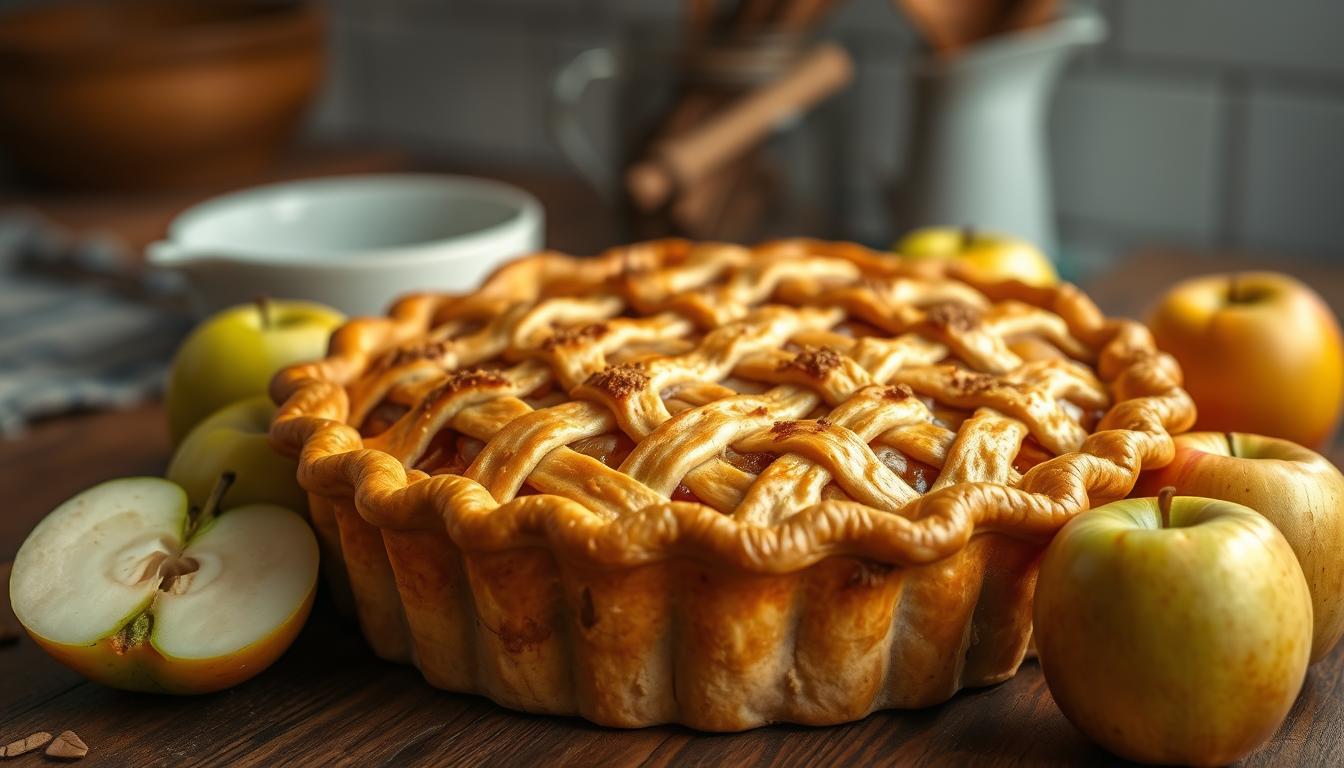
When you smell cinnamon and butter baking, it brings back memories of a warm kitchen. You might remember squeezing lemon over sliced apples or feeling the crunch of a golden crust. This Classic Apple Pie is simple, reliable, and uses pantry staples and fresh apples. It becomes a holiday favorite you come back to every year.
This recipe pairs a flaky all-butter crust with a saucy apple pie filling. The method is easy: a tender crust, spiced apples brightened by lemon, and a glossy sauce. It makes a 9-inch pie that serves about eight. It takes roughly 2 hours and 30 minutes to make, including chilling time.
By following trusted techniques, you’ll see why traditional apple pie is worth the extra effort. Once you master this recipe, it becomes your go-to for Thanksgiving, small weekday treats, and all celebrations in between.
Table of Contents
Key Takeaways
- This classic apple pie balances a flaky all-butter crust with a saucy, spiced filling.
- Uses pantry staples and fresh apples to create a reliable homemade apple pie.
- Yields a 9-inch pie, serves about 8, total time ~2 hours 30 minutes.
- Techniques focus on crust coldness and proper thickening for the best apple pie recipe.
- Becomes a go-to traditional apple pie for holidays and everyday baking alike.
Why this Classic Apple Pie recipe works every time
You want a reliable apple pie that tastes like home. This Classic Apple Pie balances texture and flavor perfectly. It’s a crowd-pleaser with the right mix of apples, a cold all-butter crust, and a thickened filling.
Balance of tart and sweet apples
Start with Granny Smith for tartness and structure. Add sweeter apples like Honeycrisp, Fuji, or Golden Delicious for depth. If your apples are very sweet, reduce sugar to avoid a cloying filling.
Flaky all-butter pie crust
An all-butter crust is flaky and crisp. Keep butter cold and mix just until the dough comes together. This prevents a tough crust.
Perfectly thickened filling
Use enough fruit to fill the pan slightly. More apples release juices that concentrate during baking. Let sliced apples sit briefly to macerate, then add a thickener like cornstarch or tapioca. This ensures the filling is glossy and spoonable without being runny.
| Component | Key Action | Why it matters |
|---|---|---|
| Apple selection | Mix tart and sweet (Granny Smith + Honeycrisp) | Adds bright acidity, layered sweetness, and keeps texture |
| Pie crust | Use all-butter; keep ingredients cold; avoid overworking | Creates flaky, sturdy apple pie crust that supports filling |
| Filling prep | Let apples rest; use cornstarch or tapioca | Controls juices so the delicious apple pie slices hold shape |
| Bake method | Start hot to set crust, then lower heat to finish | Yields a golden crust and properly cooked apple pie filling |
Ingredients for a homemade apple pie (pantry staples and fresh apples)
To make the best apple pie, start with the right ingredients. Use pantry staples and fresh apples for a delicious pie. Here are the lists for the crust, filling, and tools you’ll need.
Pie crust ingredients
For a flaky crust, you’ll need 2 1/2 cups of flour, 1 tsp of salt, and 2 tbsp of sugar. Cut in 1 cup of cold butter until it looks like coarse crumbs. Add 3–4 tbsp of ice water or chilled vodka to mix it well.
Chill the dough, then roll it into two disks. You can also use store-bought pastry for a quick pie. Keep an egg wash and coarse sugar ready for finishing touches.
Filling ingredients
Choose 2 to 2 1/4 pounds of tart apples, like Granny Smiths. Peel, core, and slice 6–7 apples. Mix 1 cup of sugar and 1/2 cup of brown sugar for sweetness.
Add 3 tbsp of flour or 2 tbsp of cornstarch for thickening. Use 1/4 cup of water or 1 tbsp of lemon juice for the right sauciness.
Season with 1 1/2 to 2 1/2 tsp of cinnamon and a pinch of nutmeg. Add 1/2 tsp of ginger and 1/8 tsp of cardamom for extra flavor. Stir in 8 tbsp of butter and 1–2 tsp of vanilla. Taste and adjust until it’s perfect.
Tools you’ll need
Get a 9-inch deep pie pan, a rolling pin, and mixing bowls. A medium saucepan and whisk are needed for stovetop cooking.
A pizza cutter or sharp knife is great for lattice tops. Use parchment paper and a pastry brush for egg wash. A food processor and kitchen scale can speed up the process. Chilling in a freezer or refrigerator is key for flaky crust.
| Category | Key Items | Why it matters |
|---|---|---|
| Crust | All-purpose flour, cold unsalted butter, ice water/vodka, salt, sugar, egg wash | Cold butter and minimal handling create layers and flakiness for a superior apple pie crust |
| Filling | Granny Smith apples (6–7), granulated and brown sugar, flour or cornstarch, butter, cinnamon, nutmeg | Tart apples and balanced sweetening produce a filling that sets up and tastes bright |
| Spices | Cinnamon, nutmeg, ginger, optional cardamom | Apple pie spices add warmth and character, lifting the simple fruit into the best apple pie recipe |
| Tools | 9-inch deep pie pan, rolling pin, pizza cutter, saucepan, whisk, pastry brush | Correct tools save time and help you achieve consistent results for an easy apple pie |
Choosing the best apples for your pie
Choosing the right apples is key for a great Classic Apple Pie. You need apples that keep their shape, balance sweetness and tartness, and taste clean after baking. Try different apples raw to see how sweet and firm they are before baking.
Top baking varieties
Granny Smith apples are a top choice for many bakers. They stay firm and add a bright tartness to the pie. Honeycrisp and Pink Lady apples offer a crisp texture and a sweet-tart flavor that enhances the filling.
Golden Delicious and Jonagold apples soften a bit but keep their flavor, making them perfect for a tender pie. Braeburn and Fuji apples are sweeter, so you can use less sugar in your recipe.
Mixing apples for depth
Using at least two types of apples is best for taste and texture. Mix a tart apple like Granny Smith with a sweet-crisp one like Honeycrisp or Pink Lady. This mix creates a complex flavor in every bite of your pie.
If your filling is over four pounds of apples, the mix of varieties will affect how much liquid it releases. Typical juices are about three quarters of a cup; adjust your thickeners if you get more liquid.
Apples to avoid
Avoid McIntosh apples because they turn to mush when heated. Red Delicious apples lack the acidity and firmness needed, giving a dull flavor in pies.
When picking apples for your pie, look for firmness and minimal bruising. Fresh, crisp apples ensure controlled juice release and a firm pie slice.
| Apple Variety | Flavor Profile | Texture After Baking | Best Use |
|---|---|---|---|
| Granny Smith | Tart, bright | Holds shape well | Base tart apple for balance |
| Honeycrisp | Sweet-tart, juicy | Stays crisp | Adds bite and freshness |
| Pink Lady | Crisp, slightly tart | Firm but tender | Flavor depth and acidity |
| Golden Delicious | Mildly sweet | Softens nicely | Tender texture, good blending |
| Jonagold | Sweet with mild tartness | Holds some shape | Complex flavor in blends |
| Braeburn | Balanced sweet-tart | Firm | Reliable choice for texture |
| Fuji | Very sweet | Can stay firm | Use to lower added sugar |
| McIntosh | Tender, sweet | Breaks down | Not recommended for pie |
| Red Delicious | Mild, sweet | Waxy, dull | Avoid for baking |
How to make a flaky pie crust like a pro
Creating a perfect apple pie crust involves technique, timing, and cold butter. Keep your workspace cool. This ensures the butter stays visible in the dough. This texture leads to a flaky pie crust with tender layers when baked.
Keep everything cold
Chill your butter, flour, and mixing bowl before starting. Cold butter creates steam pockets in the oven. This steam lift is key to a flaky pie crust.
If the dough warms up, stop and refrigerate it for 15–30 minutes. Or, freeze it for a few minutes until it’s firm.
Don’t overwork the dough
Mix the dough just until it comes together. You should see tiny butter bits, not a smooth ball. Overworking makes the dough tough, ruining the flaky layers of a homemade apple pie.
Use a pastry cutter or two forks for quick, gentle mixing.
Rolling, chilling, and transferring tips
Roll the bottom crust to about 12 inches. It should fit a 9-inch pie plate with some overhang. Roll between parchment sheets to prevent sticking and make transfer easy.
For an easy apple pie crust, slide the rolled dough onto the plate by folding it in half, then unfolding.
Chill both crusts before assembling the pie. After filling and sealing, rest the pie in the fridge or freezer for 15 minutes. This final chill helps the crust bake into a crisp, golden shell.
For egg wash, mix egg yolk with a splash of cream for quick bakes. This gives a deep gloss. For longer bakes, whisk an egg with water for a reliable golden finish. You can make dough up to five days ahead in the fridge or freeze for up to two months for true make-ahead convenience.
Step-by-step: Making the homemade apple pie filling
Plan carefully to make your apple pie filling perfect. You can make a stovetop sauce or toss raw apples with a thickener. Both methods create a delicious homemade apple pie filling with a unique texture and shine.
Stovetop sauce method
Melt 2 tablespoons butter in a medium saucepan over medium heat. Add 3 tablespoons all-purpose flour and cook for about 1 minute. Then, stir in 1/4 cup water and 1 cup granulated sugar. Simmer for 3 minutes and remove from heat.
Do not overcook the sauce. It should be glossy and pourable. This way, it will coat the apples without becoming gummy.
Peel, core, and slice apples about 1/4 inch thick (roughly 7 cups). Toss the slices with 1 1/2 teaspoons cinnamon. Pour the warm sauce over the fruit to coat.
This method makes a silky apple pie filling. It will thicken in the oven once the juices bubble.
Tossing and resting the apples
In a large bowl, mix peeled, cored, 1/4″ sliced apples with 1/2 cup packed brown sugar, 2 tablespoons flour, 1 tablespoon lemon juice, and 1 teaspoon vanilla. Add apple pie spices: 1 1/2 teaspoons cinnamon, 1/4 teaspoon ginger, and a pinch of nutmeg. Cut slices in half if you want to pack more apples into the pan.
Let the mixture rest briefly. This allows the sugar to draw out some juice. If you prefer a looser filling, reserve the released juices and pour them back into the pie for extra flavor.
Thickener options and timing
For a no-cook approach, toss apples with 2 tablespoons cornstarch plus 2 tablespoons granulated sugar and salt. Let sit about an hour. The apples will release roughly 3/4 cup liquid. Keep that liquid in the filling.
During baking, the liquid will reduce and set into a thickened apple pie filling.
You can swap cornstarch for 4 tablespoons instant tapioca for a clearer sauce. If you use the stovetop sauce, avoid extra thickeners. The cooked flour slurry gives structure while keeping the filling tender.
Before baking, dot 1 tablespoon butter over the filling for a glossy finish. Bake until the filling bubbles and the juices look set. Then, follow the baking schedule for timing and temperature.
Assembling your apple pie: bottom crust, filling, and top crust options
Begin by placing the chilled bottom dough into a 9″ deep pie pan. Roll it to 12″ to fit the pan without stretching. Trim the edges to leave a 1/2″ overhang for sealing later.
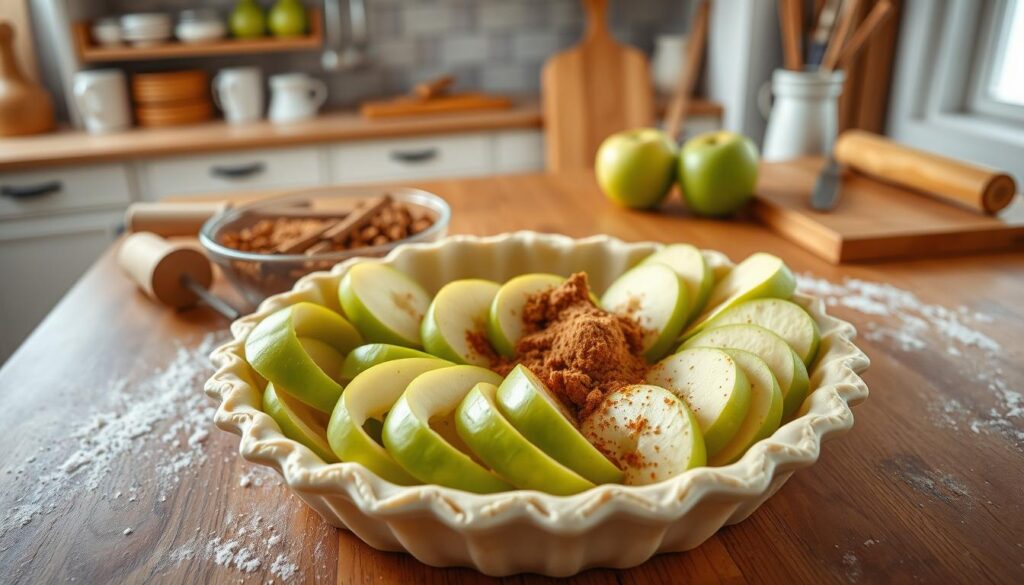
Fill the pie by mounding the apple mixture slightly in the center. Make sure not to smear juices on the crust edge. Dot the filling with about 1 tablespoon of butter for extra flavor and shine.
For a lattice apple pie, roll the top crust to about 11″ and cut into ten even strips. Weave these strips over the filling to form a tight basket. This design lets steam escape while keeping the apples visible, helping the filling thicken without overcooking the bottom.
If you prefer a full-top crust, place the rolled disc over the apples and trim excess. Cut several vents to release steam or use decorative shapes for visual appeal. Both methods support a well-baked interior when done correctly.
After trimming, roll the bottom over the top edge to create a thick rim. Tuck the edge under and crimp with your fingers or a fork for a neat seal. An egg wash made from one egg and a splash of water will give your crust a golden finish during baking.
Chill the assembled pie briefly in the freezer for 10–15 minutes to firm the dough. Shield the edges with foil if they brown too quickly during baking. These steps ensure a reliable assembly and even bake with a crisp, flaky crust.
Baking instructions for a golden crust and bubbling filling
Preheat your oven to 425°F for a perfect bake. Place a rack in the center for even heating. This temperature is key for a golden crust and a well-cooked filling.
Initial high heat for crust set
Put the chilled pie in the oven for 15 minutes. This high heat sets the bottom crust and starts browning the top. Use foil on the rack below to catch drips and keep the oven clean.
Lower heat to finish baking
After 15 minutes, lower the oven to 350°F. Bake for about 45 minutes more. The filling should bubble for at least five minutes, showing it’s thickened and the apples are tender.
Protecting the edges and checking doneness
Keep an eye on the crust edges. If they brown too fast, cover them with foil. For a slower bake, use 375–400°F and add a little more time. Use an egg wash to keep the top shiny.
When the top is golden and juices bubble, the pie is ready. Cool it on a wire rack before slicing. This method ensures a perfect apple pie every time.
Common problems and how to fix them
When your apple pie doesn’t turn out right, a few fixes can help. This guide will show you how to fix common apple pie issues. Follow each tip and try the best solution for your pie.
Runny filling
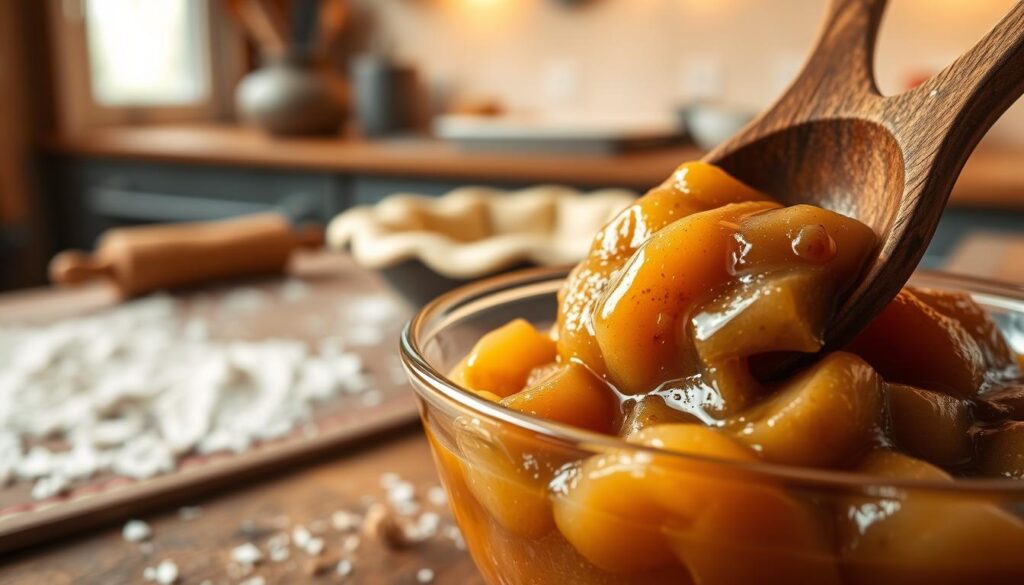
If your pie’s filling is runny, check if the sauce boiled too long or if the apples released too much juice. Coat the apples with a thickened sauce before filling the crust. This helps keep the filling in place.
Use a thickener if needed: 2 tablespoons of cornstarch or 4 tablespoons of instant tapioca per 6 cups of apples works well. Bake until the juices bubble and look shiny. Let the pie cool for at least an hour. This helps the juices set and prevents a runny filling.
Soggy bottom crust
A soggy crust often comes from warm butter or dough that’s handled too much. Keep butter cold and chill the dough before rolling. An all-butter crust is better for flavor and structure, so use it if you can.
To stop moisture from getting in, freeze the pie for 15 minutes before baking. Seal the edge well without letting filling get on the rim. This stops leaks that make the crust soggy.
Crust too tough or crumbly
Tough crusts happen when you overwork the gluten. Mix gently and stop when it just holds together. Roll the dough between parchment to avoid too much flour and handling.
Crumbly crusts might need a bit more water or gentler mixing. Keep ingredients cold and use the right fat-to-flour ratio. These tips will make your crust flaky and tender again.
- Quick rescue for runny pies: Reheat slices briefly on a rimmed sheet at 375°F to reduce surface juice, then cool before serving.
- Prevent soggy crust: Chill dough, use all-butter pastry, and freeze assembled pies 15 minutes before baking.
- Fix crumbly dough: Add 1 tablespoon ice water at a time until dough holds together; handle minimally.
Make-ahead, storage, and reheating tips
Plan ahead to save time and keep flavor. A few simple steps help you make-ahead apple pie with great texture and bright filling. Below are practical options for prepping, storing, and reheating so your pie tastes fresh when you serve it.
Make-ahead options
Prepare crusts up to five days ahead and keep them wrapped in the refrigerator. You may freeze crusts for up to two months if you need longer storage. Peel and slice apples a day or two before baking, toss them with lemon juice to prevent browning, and hold off on adding sugar until the day you assemble the pie.
Storing baked pie
Once your pie cools for at least an hour so juices set, you can store apple pie at room temperature covered for up to two days. For longer keeping, refrigerate a covered pie for up to four days. If you want to store apple pie for several weeks, wrap it tightly and freeze. Freezing apple pie whole works well for up to two to three months.
Reheating for serving
To reheat apple pie, thaw frozen pies overnight in the refrigerator if needed. Warm the pie in a 350°F oven until heated through; this keeps the crust crisp and the filling bubbling. For slices, cover edges with foil if they brown too fast, and reheat until just warmed to preserve texture.
Quick reference
- Crusts: Refrigerate up to 5 days, freeze up to 2 months.
- Baked pie at room temp: 2 days covered.
- Refrigerated baked pie: Up to 4–7 days depending on preference.
- Freezing apple pie: Wrapped and sealed, 2–3 months for best quality.
- To reheat apple pie: Thaw if frozen, then 350°F oven until warm.
Tips, variations, and serving suggestions for a delicious apple pie
Try these tips to make your apple pie better. Small changes in spices, sugar, or crust can make a big difference. Start with one idea and see what you like best.
Spice and sugar ideas
Begin with cinnamon as your main spice. Add a bit of nutmeg for extra warmth. For a deeper flavor, mix in ginger or cardamom carefully.
Match the sugar to your apples. Use brown and granulated sugar for caramel notes. Add lemon juice and vanilla extract for brightness when mixing the fruit.
Top crust alternatives
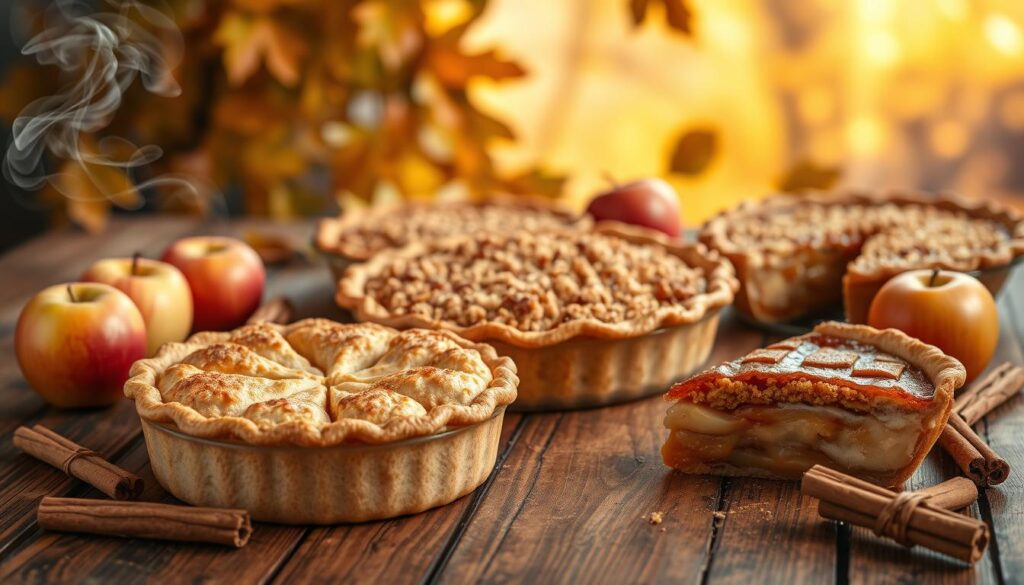
Choose a top crust that suits your taste. A lattice pie shows off the filling and looks classic.
For a smooth finish, use a full crust with vents. For texture, sprinkle coarse sugar or make a streusel topping.
Serving ideas
Let the pie cool to set the filling. For warm slices, reheat at 300°F for 8–12 minutes.
Serve with vanilla ice cream for a classic touch. Try Haagen-Dazs or Ben & Jerry’s. Whipped cream or crème fraîche add a nice tang.
| Choice | Effect on Flavor | When to Use |
|---|---|---|
| Brown + granulated sugar | Caramel depth and balanced sweetness | Mixed apple varieties or tart apples like Granny Smith |
| Cinnamon, nutmeg, ginger | Warm, layered spice profile | Holiday pies and cooler weather baking |
| Cardamom or allspice | Complex, aromatic notes | When you want a gourmet twist |
| Lattice apple pie | Visual appeal, quicker evaporation of excess juices | Showcase filled pies or when you want a rustic look |
| Streusel topping | Crunchy contrast and buttery sweetness | When you prefer texture over traditional crust |
| Egg wash (egg + water) | Golden shine and slight gloss | Always for a bakery-style finish |
| Cornstarch or tapioca | Clear, stable filling without gumminess | When you want a clean slice |
| Chilled vodka in crust | Less gluten; extra flaky layers | When you aim for a delicate, flaky crust |
Conclusion
You can make a Classic Apple Pie with simple ingredients. It’s perfect for your holiday table. Start with an all-butter, flaky crust. Use cold butter and handle it little.
Make a saucy filling with mixed baking apples. Let the pie cool before slicing. Serve it warm with vanilla ice cream for a delicious treat.
To make the best apple pie, focus on the basics. Choose firm apples like Honeycrisp and Granny Smith. Use the right thickener to control juices.
Bake until the filling bubbles. Preparing the crust or filling a day ahead makes things easier. This way, you can enjoy the process more.
With cold butter, minimal handling, and mixing apple varieties, your pie will be great. Follow these steps to make a classic pie that tastes homemade and timeless.