
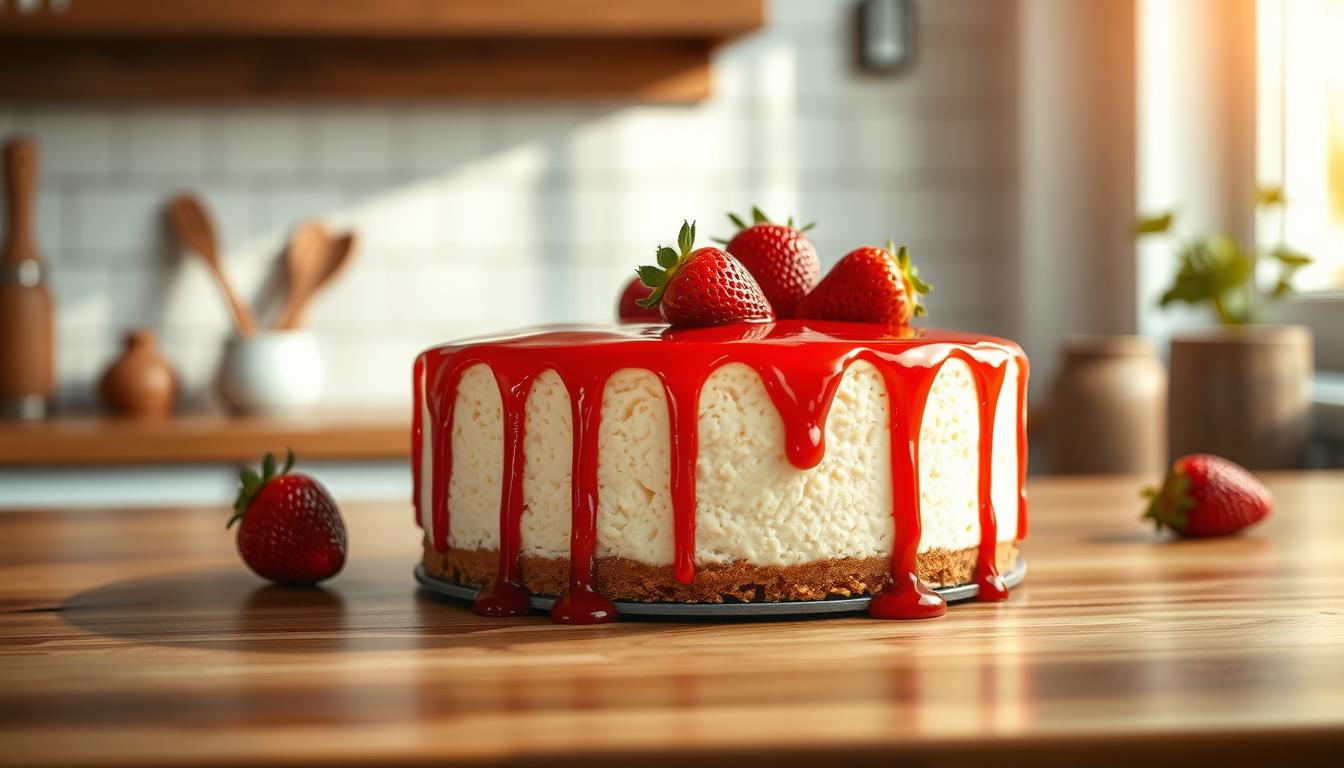
Ever had that moment when a slice of dessert feels like a celebration? Maybe it’s after a long week, a visit from friends, or a cozy Sunday. This Best New York Cheesecake Recipe is your ticket to that moment. It’s a tall, classic dessert that slices clean, tastes rich, and looks like it came from a bakery.
This guide will teach you how to make a creamy cheesecake that never cracks. You’ll learn the importance of full-fat cream cheese and room-temperature ingredients. Plus, baking low and slow for a silky texture and chilling overnight for neat slices are key. Whether you prefer a graham cracker crust or go crustless, the steps are simple and repeatable for a bakery-quality result.
Get ready for about 20 minutes of prep, 1 hour 45–120 minutes of baking, and at least 8 hours of chilling. Expect rich, flavorful slices with typical calorie ranges per serving. Serve them with berries, whipped cream, or a fruit coulis. Follow these steps and enjoy a creamy cheesecake with perfect presentation every time.
Table of Contents
Key Takeaways
- Use full‑fat cream cheese and room‑temperature ingredients for a smooth, dense texture.
- Bake low and slow to reduce cracking and set the filling evenly.
- Chill at least 8 hours (overnight preferred) for clean slices and stable structure.
- Choose a 9–10 inch springform pan; 10‑inch yields taller, crustless options if desired.
- Warm your knife between cuts and wipe clean for the best presentation.
Why This New York Cheesecake Recipe Works Every Time
The secret to a great New York Cheesecake lies in three key areas: balanced ingredients, careful handling, and smart flavoring. By sticking to a traditional recipe, you get a cheesecake that’s dense, silky, and never cracks.
Balance of ingredients for creamy cheesecake texture
Begin with the right mix. You’ll need 24–32 ounces of full-fat cream cheese, 4–5 large eggs, and about 1¾–2 cups of sour cream. Add a small amount of flour or cornstarch for stability. Sugar must be measured precisely; too little makes the cake flat, too much thins it.
Why full‑fat cream cheese and room‑temperature ingredients matter
Choose block-style full-fat cream cheese for the best taste and texture. Cold cream cheese can lead to lumps. Make sure all ingredients are at room temperature for smooth mixing. Beat the cream cheese gently, then add other ingredients to prevent over-aeration.
Role of sour cream and lemon juice in flavor and moisture
Sour cream adds tang and keeps the cheesecake moist. Some bakers use a sour-cream topping for a glossy finish. A bit of fresh lemon juice or zest brightens the flavor without overpowering the classic taste.
Ingredients for an authentic New York Cheesecake
To bake a real New York Cheesecake, you need the right ingredients and tools. It should be dense, creamy, and crack-free. Here are the main parts and options for a classic cheesecake with a graham cracker crust or a crustless version for extra height.
Filling essentials:
- Full‑fat cream cheese: 24–32 ounces (3–4 8‑oz blocks) at room temperature
- Sour cream: 1¾–2 cups, plus 1 cup if you want a sour cream topping
- Eggs: 4–5 large eggs, room temperature
- Granulated sugar: about 1¼–2 cups depending on cake size
- Stabilizer: 1½ tablespoons all‑purpose flour or 2 tablespoons cornstarch
- Flavor: 1–2 tablespoons lemon juice or zest and 1–1½ teaspoons vanilla extract or scraped vanilla bean
Crust options:
- Classic graham cracker crust: about 2½ cups crushed graham crackers mixed with ~⅓ cup (75 g) melted salted butter; press into the pan and up the sides if desired
- Alternative cookie crusts: Oreo, Biscoff, or vanilla wafers; adjust butter to reach a firm, sandy texture
- Crustless: use a 10‑inch springform pan and butter it generously for a tall, pure baked cheesecake
Tools and equipment you’ll need:
- 9–10 inch springform pan (9‑inch for denser cakes, 10‑inch for taller crustless cakes)
- Electric mixer with paddle or whisk; mix on low to avoid excess air
- Oven thermometer to maintain a low, steady baking temperature around 265°F (130°C)
- Roasting pan and heavy‑duty aluminum foil if you choose a water bath
- Offset spatula, mixing bowls, measuring tools, and a bench scraper or spoon for pressing crust
Use these ingredients in the right amounts for the best results. Full-fat dairy and room-temperature ingredients help blend smoothly and avoid lumps. For a cheesecake with a graham cracker crust, press the crumbs firmly and chill before filling. For a tall, pure baked cheesecake, go crustless and focus on careful baking for a clean edge.
| Component | Typical Quantity | Notes |
|---|---|---|
| Cream cheese | 24–32 oz | Room temperature for smooth blending |
| Sour cream | 1¾–2 cups | Add 1 cup extra for optional topping |
| Eggs | 4–5 large | Room temperature to reduce bubbles |
| Sugar | 1¼–2 cups | Adjust to taste and cake size |
| Flour or cornstarch | 1½ tbsp flour or 2 tbsp cornstarch | Stabilizes filling and prevents cracks |
| Lemon & vanilla | 1–2 tbsp lemon, 1–1½ tsp vanilla | Fresh lemon and real vanilla bean give depth |
| Graham cracker crumbs | 2½ cups (for crust) | Mix with ~⅓ cup melted butter for firm base |
| Pan & tools | 9–10″ springform, mixer, oven thermometer | Low‑speed mixing and accurate oven temp are key |
Preparing the crust for a sturdy graham cracker base
You want a crust that supports a rich filling without going soggy. Start with the classic graham cracker crust ratio: about 2½ cups (250 g) crushed graham crackers mixed with roughly 1/3 cup (75 g) melted salted butter until the texture is like damp sand. For a smaller pan, scale those amounts down evenly.
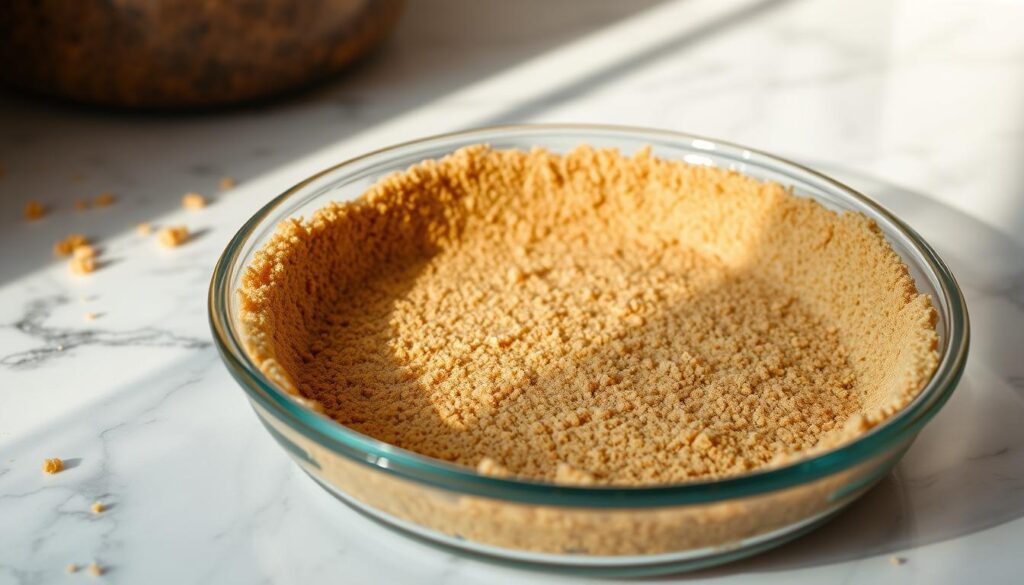
Press the crumbs firmly into the pan bottom and up the sides about 1 inch. Use the flat bottom of a measuring cup or a glass to compact the mixture. A tightly packed crust resists moisture from the filling and yields a clean slice.
Chill the pressed crust while you make the filling so it firms. You can line the pan with parchment for easier removal and lock the springform base to prevent leakage. For extra protection, bake the crust for 8–10 minutes at 350°F when a crisp base is desired.
Crust recipe and ratios: crushed graham crackers and melted butter
Use the standard ratio for dependable results: 2½ cups crushed graham crackers to 1/3 cup melted butter. If you like a sweeter or firmer base, add 1–2 tablespoons of sugar or a touch more butter. For a thinner crust, reduce the crumbs proportionally.
How to press and chill the crust to avoid a soggy bottom
Pack crumbs tightly and level the surface. Chill at least 15–30 minutes so the butter solidifies. This step reduces seepage and helps the crust hold up during baking and chilling.
If you bake the crust briefly before filling, cool it completely first. A cooled, firm crust will keep the filling from soaking in during the long chill period.
Alternatives: cookie crusts (Digestive, Oreo, Biscoff) and crustless method
Digestive crust works as a European take using the same 2½ cup to 1/3 cup ratio. Digestive biscuits yield a slightly coarser, less sweet base that pairs well with lemon or berry toppings.
Oreo crust needs less added sugar and often less butter because the cookies already contain fat and sweetness. Pulse whole Oreos in a food processor, measure about 2½ cups crushed, then use 1/4–1/3 cup melted butter and press firmly. Chill after pressing for best results.
If you prefer a crustless cheesecake, butter the pan well and line with parchment to lift the cake. Use a 10-inch pan for taller rise and to avoid overflow. A crustless cheesecake yields a denser profile and highlights the filling on its own.
Mixing the filling for a silky, crack‑free baked cheesecake
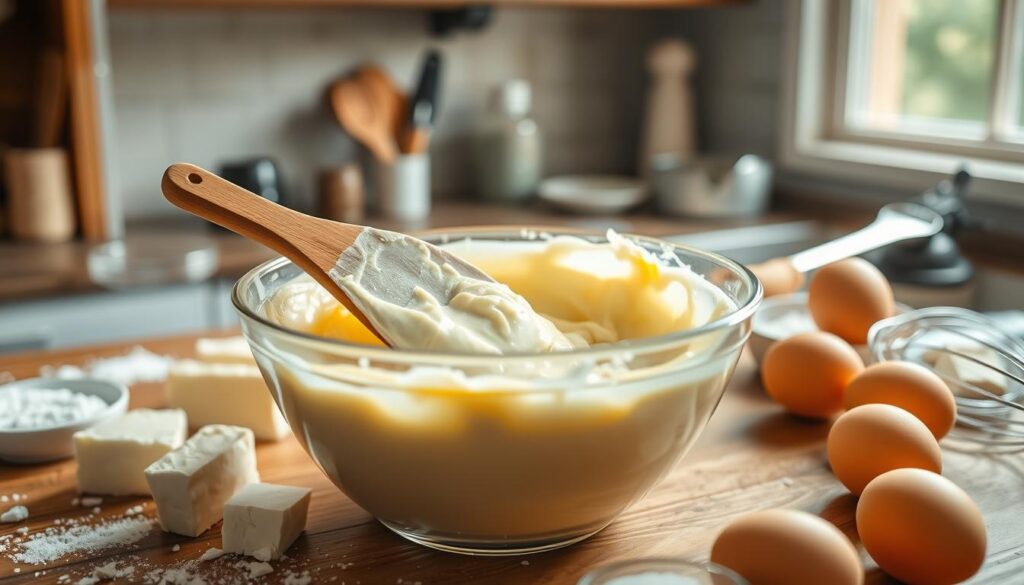
Begin with cold tools and room-temperature cream cheese for the best results. Aim for a dense, glossy batter that will set without splitting. Mix at low speed to avoid trapping air that causes cracks.
Low-speed mixing and visual cues to avoid over-aeration
Beat the cream cheese on low speed until smooth, about 30–40 seconds. Stop when there are no lumps. Then, add sugar, sour cream, lemon, vanilla, and your chosen stabilizer.
Mix on low until the batter is silky and glossy, about one minute. Look for a batter that moves like slow honey. If it’s frothy or has bubbles, you’ve over-aerated it. Scrape the bowl and slow down.
How to combine eggs without adding bubbles
Whisk eggs gently in a separate bowl until just combined. Don’t beat them into a froth. Add eggs one at a time or fold them in slowly with a rubber spatula.
Folding keeps air out and preserves a smooth texture. Tap the filled pan on the counter to release any trapped air bubbles before baking.
Using flour or cornstarch to stabilize the filling and prevent cracks
Use 1½ tablespoons all-purpose flour or 2 tablespoons cornstarch per typical 9-inch recipe. These stabilizers help proteins set evenly and reduce the chance of curdling or a rubbery finish.
Stabilizers also make it easier to achieve a crack-free cheesecake by supporting a dense, creamy structure as the batter cools.
If you scrape the bowl frequently, mix at low speed, and fold eggs gently while using a small amount of all-purpose flour or cornstarch, you’ll have a silky, crack-free cheesecake.
Baking techniques for a creamy, crack‑free result
Before you start baking New York Cheesecake, pick a plan. Temperature and timing are key, not just mixing. Use an oven thermometer and choose between a low and slow bake or a gentle bain‑marie.
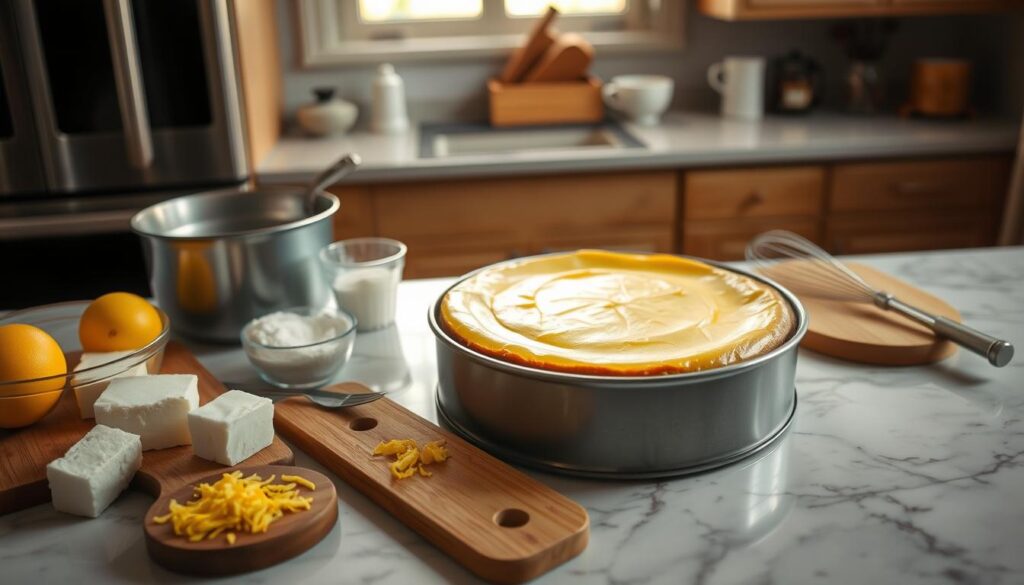
For a no water bath cheesecake, bake at about 265°F for a smooth texture. This method takes about 1 hour 45 minutes to 2 hours for a 9‑inch cake. If you like a traditional water bath, preheat to 300°F or start higher and adjust as needed.
Wrap the springform pan in two layers of heavy foil for a water bath. Place it in a roasting pan and add boiling water halfway up. This method ensures even heat and prevents top browning.
No‑bain‑marie recipes are simpler. Modern bakers get great results without a water bath. They keep the oven steady, use room‑temperature ingredients, and avoid overwhipping. This makes the no water bath cheesecake easy for home kitchens.
Look for doneness cues instead of a toothpick. The outer inch should be set and slightly matte. The center should wobble like soft Jell‑O but not be liquid. For sour‑cream topped versions, add the topping and bake an extra 5–7 minutes until it loses its shine.
Cool the cake slowly in the turned‑off oven with the door ajar for 30–60 minutes. This helps prevent sudden contractions that cause cracks. After cooling at room temperature, chill the cheesecake in the refrigerator to set it completely.
Cooling and chilling: the secret to clean slices and dense texture
Let the cheesecake rest after baking. This lets the heat even out in the filling. It helps cool the cheesecake slowly, preventing cracks.
How long to wait
Once it’s room temperature, put it in the fridge. Aim for an overnight chill for the best texture. Eight hours is the minimum, but 24 hours is even better.
Loosening the rim
For a springform pan, use a thin metal spatula or knife around the edge after chilling. Wait until after the overnight chill to remove the rim. This ensures a clean release and a perfect structure.
Slicing like a pro
To get neat slices, warm a thin nonstick knife under hot water. Dry it and make each cut in one smooth stroke. Wipe the blade between slices to keep the edges crisp. Let the slices sit at room temperature for 15–30 minutes before serving for a silkier texture.
Short storage notes
Store leftovers in an airtight container in the fridge for up to five days. For longer storage, freeze individual slices wrapped tightly. Thaw them in the fridge overnight for the best texture and preservation.
Toppings, serving suggestions, and flavor variations for a rich and decadent dessert
Make a classic New York cheesecake stand out with simple toppings and tweaks. Start with a thin sour cream layer for a glossy, tangy finish. Add fresh berries or a fruit coulis for a pop of color. For a lighter touch, top with whipped cream just before serving.
Spread 1 cup sour cream mixed with 1/4 cup sugar and 1/2 teaspoon vanilla over the hot cake. Bake for 5–7 minutes until set. Top with fresh strawberries, raspberries, or blueberries for a colorful plate. Spoon a warm fruit coulis over the cake, leaving a few berries for texture.
Flavor twists
For a brighter taste, add lemon zest to the batter for a lemon zest cheesecake. This adds a refreshing note. For a richer flavor, swirl melted dark chocolate into the filling for a chocolate swirl effect. Or, pour cooled ganache on top after chilling. Salted caramel pairs well with Biscoff or graham crusts for deeper sweetness.
Serving and portioning
Warm a knife under hot water, wipe it dry, then slice the cheesecake. For a 9–10 inch cake, cut 12 even slices for balanced portions. Let slices sit at room temperature for 15–30 minutes to soften and release aromas.
Storage and make-ahead tips
Store your topped cheesecake in the fridge for up to five days for the best flavor. Freeze single slices wrapped tightly for longer storage. Thaw overnight in the fridge. Keep fruit coulis and whipped cream separate until serving to preserve texture.
| Finish | Why use it | Best pairing |
|---|---|---|
| Sour cream layer | Adds tang, smooth matte finish, prevents shrinking | Fresh berries, light fruit coulis |
| Whipped cream cheesecake topping | Lightens each bite, visually elegant, quick to prepare | Strawberries or vanilla bean accents |
| Fruit coulis | Brightens flavor, adds acidity and color | Mixed berries or stone fruit |
| Lemon zest cheesecake | Fresh citrus lift, balances richness | Blueberries or short crust |
| Chocolate swirl cheesecake | Creates marble effect, adds chocolate depth | Chocolate ganache or espresso |
| Salted caramel | Deep sweetness, buttery contrast | Biscoff crust or toasted nuts |
Troubleshooting common problems with baked cheesecake
Even careful bakers sometimes face issues. This guide helps you find and fix problems with classic New York cheesecake.
Fixing and preventing cracks.
To avoid cracks, mix on low speed and stop when smooth. Don’t let eggs get frothy. Add flour or cornstarch to stabilize.
Bake at 265°F (130°C) and cool slowly at room temperature before chilling.
If a crack shows up, cover it with sour cream, whipped cream, fruit, or ganache. Trim and re-level the top for a fix, then top it up.
Dealing with a runny center, dry edges, or browned top.
A runny center means it’s underbaked. Look for set edges and a center that jiggles. Chill fully before checking.
If it’s too soft, bake for 5–10 minutes more in small increments.
Dry edges come from overbaking. Take it out when edges set. Next time, bake at a lower temperature or for less time.
A browned top means too high heat or a rack too close. Use an oven thermometer. Move the rack down or lower the oven heat for a better top.
Soggy crust fix and better results next time.
A soggy crust can be due to loose crumbs, too little butter, or a warm filling. Press crumbs tightly and bake the crust for 8–10 minutes before adding filling. Use more butter for coarse crumbs.
Chill the crust in the pan before adding filling. For cookie crusts, brush with melted chocolate to prevent moisture. Pack crumbs well and chill the cheesecake fully before cutting.
Quick checklist for common mishaps.
- Tap the pan to release air pockets before baking to reduce cracking risk.
- Avoid toothpick tests in the center; piercing can introduce cracks and misjudge doneness.
- If using a water bath, wrap the springform tightly in foil to prevent leaks and soggy edges.
- Keep an oven thermometer nearby so you can adjust to actual heat, not just dial settings.
Conclusion
You can make the Best New York Cheesecake Recipe at home by following a few reliable principles. Use full‑fat cream cheese and bring all ingredients to room temperature. Mix gently at low speed, add a small stabilizer like flour or cornstarch, and avoid over‑aeration to keep the texture dense and silky.
Bake low and slow or choose a water bath when humidity control matters. Look for set edges with a slightly wobbly center, then cool gradually at room temperature before refrigerating for at least 8 hours or overnight. These steps will help you achieve an authentic New York Cheesecake that is creamy and crack‑free.
Prepare a sturdy graham cracker crust or go crustless, finish with an optional sour cream layer or whipped cream, and top with fresh berries for a classic presentation. Let slices rest 15–30 minutes at room temperature before serving to bring out the flavors of your rich and decadent cheesecake.
Trust the visual cues—room‑temp ingredients, gentle mixing, and slow cooling—and repeat the method. When you follow these practical steps, the mystery disappears and you’ll consistently produce a traditional baked cheesecake worthy of sharing.