
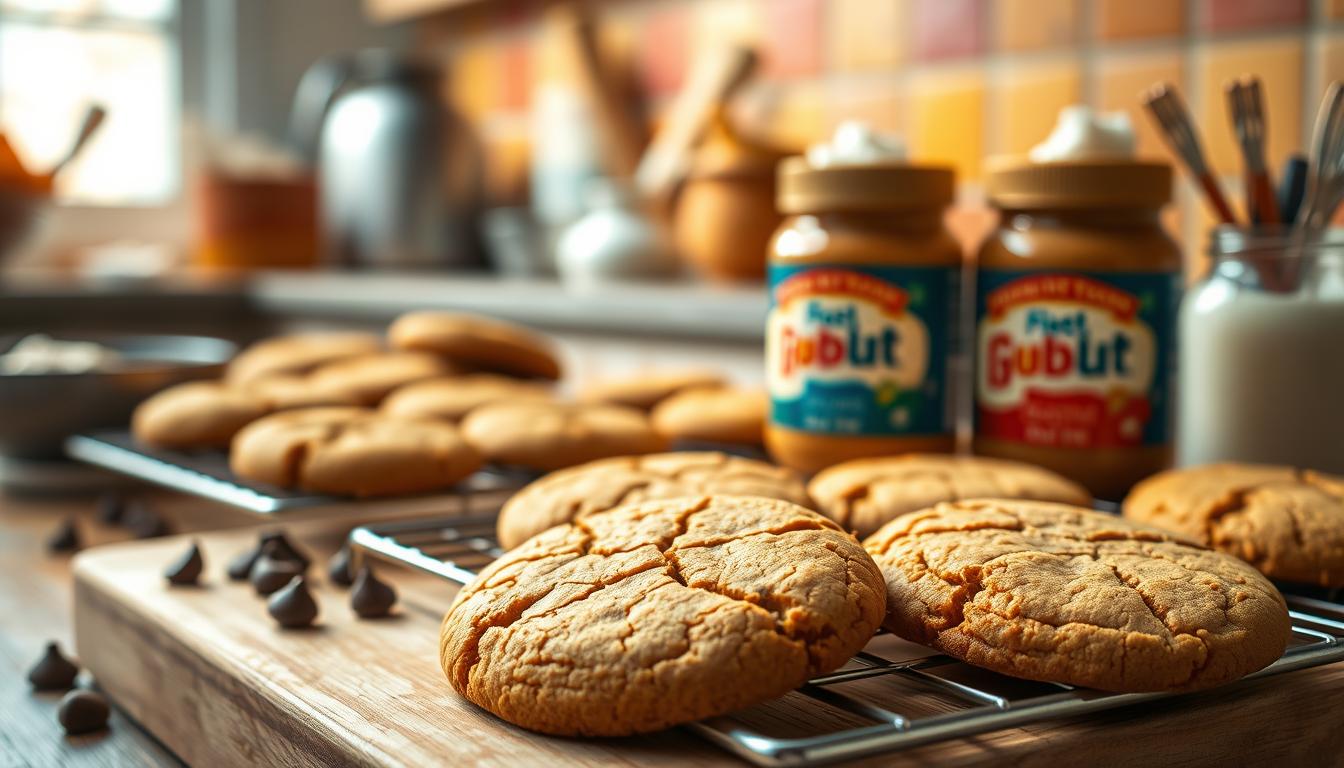
Imagine the joy of pulling cookies from the oven and filling your kitchen with childhood memories. This easy peanut butter cookies recipe aims to bring that joy. You’ll have soft, chewy cookies in about 30 minutes, thanks to a quick one-bowl method.
This recipe uses creamy peanut butter, dark brown sugar, and vanilla for a rich flavor. No need to crisscross the dough with a fork. Just scoop, roll in sugar, and bake for crinkle tops and soft centers. It’s a fast method that uses common ingredients and tools.
Testing showed baking powder makes the cookies softer and chewier. But baking soda works too. These cookies are perfect as is or with chocolate chips or sea salt. Store them in an airtight container or freeze dough balls for later.
Table of Contents
Key Takeaways
- This easy peanut butter cookies recipe makes soft, chewy peanut butter cookies in about 30 minutes.
- One-bowl method and ten pantry staples keep the process simple for homemade peanut butter cookies.
- Baking powder tends to produce the best soft results; baking soda remains a valid option.
- No fork crisscross needed—rolling dough in sugar yields crinkle tops and tender centers.
- Store at room temperature for a few days or freeze dough balls for 1–2 months for make-ahead treats.
Why these are the best peanut butter cookies (soft & chewy)
You want cookies that are soft in the middle and chewy when you bite into them. This recipe is all about getting that perfect texture. It’s about the right mix of ingredients and timing to make your cookies soft and chewy.
What makes a cookie soft and chewy
Soft, chewy cookies come from the right mix of moisture and structure. Using dark brown sugar with butter and peanut butter keeps them moist. Baking them a bit less and letting them cool on the sheet for 20 minutes helps them stay soft.
How big you make your cookies matters too. Bigger cookies stay soft in the middle, while smaller ones might get crispy. Keep an eye on the baking time to ensure they stay chewy.
Key ingredients that create texture: peanut butter, brown sugar, eggs, and leaveners
Peanut butter adds fat and flavor. Brands like Jif or Skippy make the cookies smooth and consistent. Natural peanut butter works too, if you stir it well.
Dark brown sugar adds moisture and a caramel taste. Eggs help with structure and tenderness. A little baking powder helps them rise softly, unlike baking soda.
Recipe design choices that avoid dense, crunchy results
Cream the peanut butter with butter and sugars until it’s light. This helps mix the ingredients well and traps air for a soft crumb. Don’t overmix after adding flour to avoid dense cookies.
Don’t bake them too long or until they’re brown. Bake for 8–13 minutes, depending on size, and then let them cool on the sheet. The no-chill dough makes crinkly tops when you add sugar, making chewy cookies easy to make.
Ingredients you’ll need for homemade peanut butter cookies
Make a shopping list to make your baking easier. Here are the main ingredients for peanut butter cookies. They come from tested recipes and a simpler version that makes soft cookies.
Pantry staples include flour, baking powder, baking soda, sugar, brown sugar, sea salt, vanilla, and eggs. These are key for texture and taste in every cookie.
For fat and flavor, you’ll need butter and peanut butter. Use 1 cup smooth peanut butter for classic cookies or a trusted brand like Jif or Skippy. For a simpler recipe, use 1 cup creamy peanut butter with less butter for tender cookies.
Recommended peanut butter types are important. Choose creamy or natural peanut butter for texture and taste. Creamy brands are best for a smooth look. Natural brands like Santa Cruz work when stirred smooth. Crunchy peanut butter adds a nice crunch.
Leaveners and sugars make cookies chewy. A tested recipe uses dark brown sugar and granulated sugar for caramel flavor. A simpler version uses equal parts white and brown sugar. Eggs add lift and moisture; two large eggs or one in the simpler recipe make soft cookies.
Optional add-ins let you customize your cookies. Add chocolate chips or chopped chocolate for a classic treat. Try peanut butter cups or Rolos for a candy twist. Sea salt flakes or sugar for a crinkle top add a nice touch.
Measure flour carefully and use a cookie scoop for even dough. Keep granulated sugar ready for coating. These steps help make consistent, soft, chewy cookies every time.
Easy peanut butter cookies recipe: step-by-step instructions
Get ready to bake with a clear guide. It shows how to make soft, chewy peanut butter cookies. Start by gathering tools and ingredients for a smooth process. Read each step before you begin to avoid mistakes.
Preparing your kitchen: preheating, lining pans, and tools
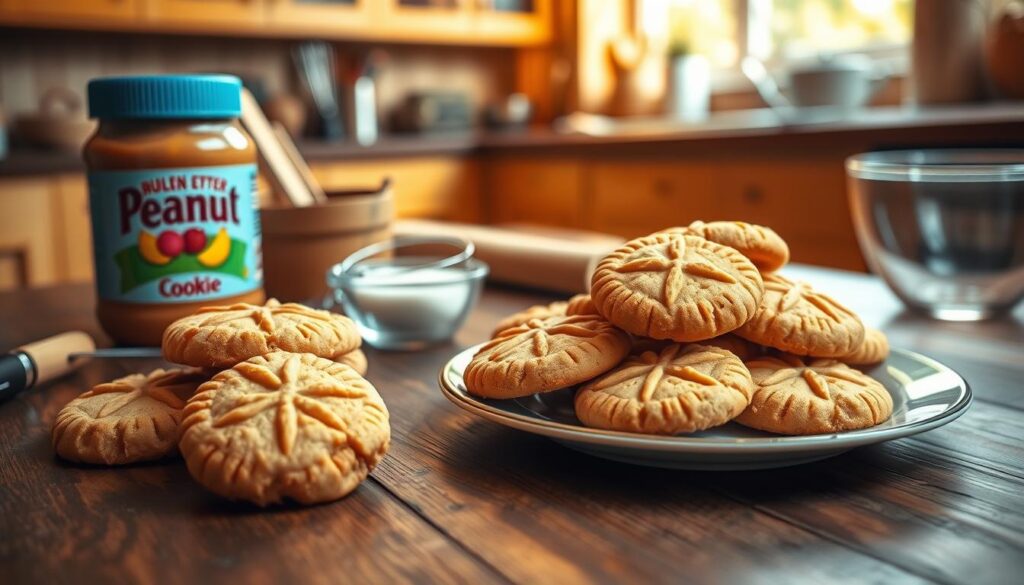
Preheat oven to 350°F and place a rack in the center. Line baking sheets with parchment paper for easy cookie release.
Use an electric stand mixer or a sturdy bowl and spatula. Have a #40, 2‑TBSP cookie scoop ready for uniform dough balls.
Mixing the dough: creaming peanut butter, butter, sugars, and vanilla
Cream peanut butter, unsalted butter, dark brown sugar, and granulated sugar with vanilla on medium speed for 4–5 minutes. The mixture should be smooth and glossy.
Scrape the bowl down as needed for even mixing. This step is key for texture and flavor.
Incorporating eggs, leaveners, salt, and flour without overmixing
Add eggs one at a time, mixing fully after each and scraping the bowl. This builds structure while keeping dough tender.
Mix in baking powder, baking soda, and sea salt for about 1 minute. Stir in flour and mix roughly 20 seconds or until just combined. Stop as soon as streaks disappear to avoid toughness.
Portioning and rolling dough balls; coating in sugar for crinkle tops
Use the cookie scoop to portion 2‑tablespoon dough balls. The dough will be soft, which is normal for a no-chill dough approach.
Roll each ball lightly or drop it into 1/2 cup granulated sugar to coat. Arrange balls about 1½ inches (4 cm) apart on the parchment-lined sheet.
Baking times and temperatures for soft, slightly underbaked centers
Bake one sheet at a time in the center of the oven at 350°F. For slightly larger 2‑TBSP scoops plan on 12–13 minutes. For smaller 1‑inch balls expect closer to 8–9 minutes.
Remove cookies when edges are set but centers remain soft. Tap the baking sheet on the counter to settle centers, sprinkle sea salt flakes if you like, and leave cookies on the sheet for 20 minutes to finish setting and keep chewy texture.
Baking tips for consistent, chewy peanut butter cookies
Perfect peanut butter cookies come from small, deliberate steps. Read these practical baking tips to keep your cookies soft, uniform, and full of flavor.
How to measure flour correctly to avoid dry cookies
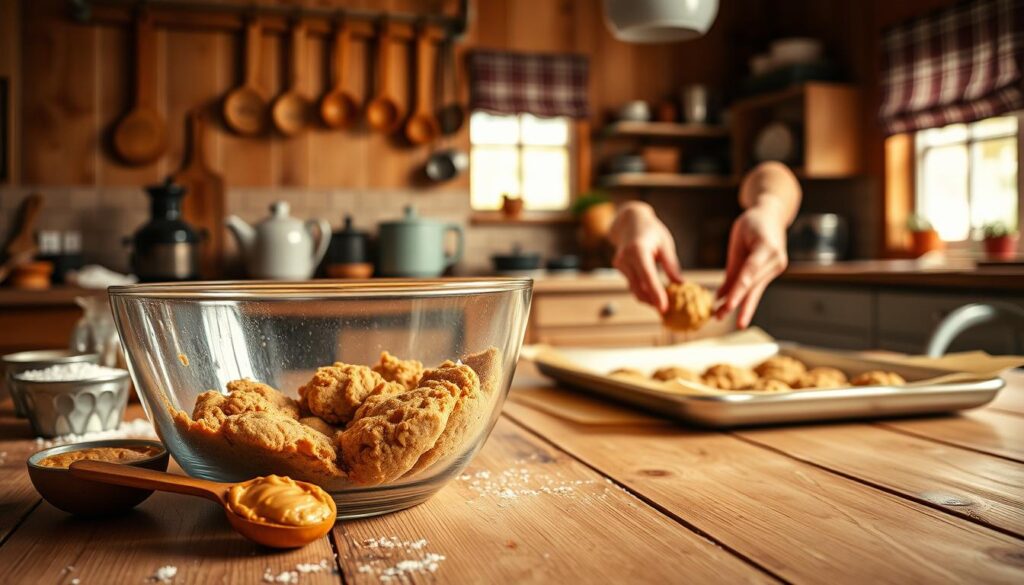
Use a kitchen scale when possible. Weighing flour delivers consistent results and removes guesswork. If you must use cups, spoon flour into the cup and level it off with a knife. Do not pack flour into the cup. Overpacked flour is the most common reason cookies turn out dry.
Why creaming thoroughly matters and how long to cream
Creaming creates structure by trapping tiny air pockets in the fat and sugar mix. For this peanut butter recipe, cream peanut butter with butter, brown sugar, and granulated sugar until the mixture looks smooth and airy. About four to five minutes on medium speed is typical with a stand mixer using a paddle attachment.
Stop creaming once the mixture is glossy and uniform. Over-creaming can cause excessive spreading. Under-creaming can make the crumb dense. Aim for even incorporation so flavor and texture reach every bite.
Resting vs. chill dough: impact on spread and thickness
This recipe is designed as a no-chill dough to produce crinkled tops and soft centers. You can bake immediately for the intended result. If you prefer taller, thicker cookies, chill the dough for at least 30 minutes. Refrigerated dough spreads less and will need a slightly longer baking time.
Freezing individual dough balls is handy for future batches. Bake from frozen by adding one to two minutes to the bake time. For consistent chewiness, portion dough with a scoop so each cookie bakes the same way. Bake one sheet at a time in the center rack for even heat.
| Tip | Why it matters | Quick action |
|---|---|---|
| Weigh flour | Prevents dry, dense cookies from too much flour | Use a digital scale or spoon and level cups |
| Cream butter and sugars thoroughly | Builds structure and even flavor distribution | Cream 4–5 minutes until smooth and airy |
| Use uniform scoops | Ensures consistent bake time and chewy centers | Use a 1.5-tablespoon cookie scoop |
| Chill dough or no-chill | Controls spread, thickness, and appearance | Bake immediately for crinkles; chill 30+ minutes for taller cookies |
| Bake one sheet at a time | Promotes even oven heat and uniform browning | Place on center rack and rotate if needed |
Variations: classic peanut butter cookies and creative twists
You can make many tasty treats from a simple dough. Just by changing a few things, you can alter the taste, texture, and look. But the peanut butter flavor stays the same.
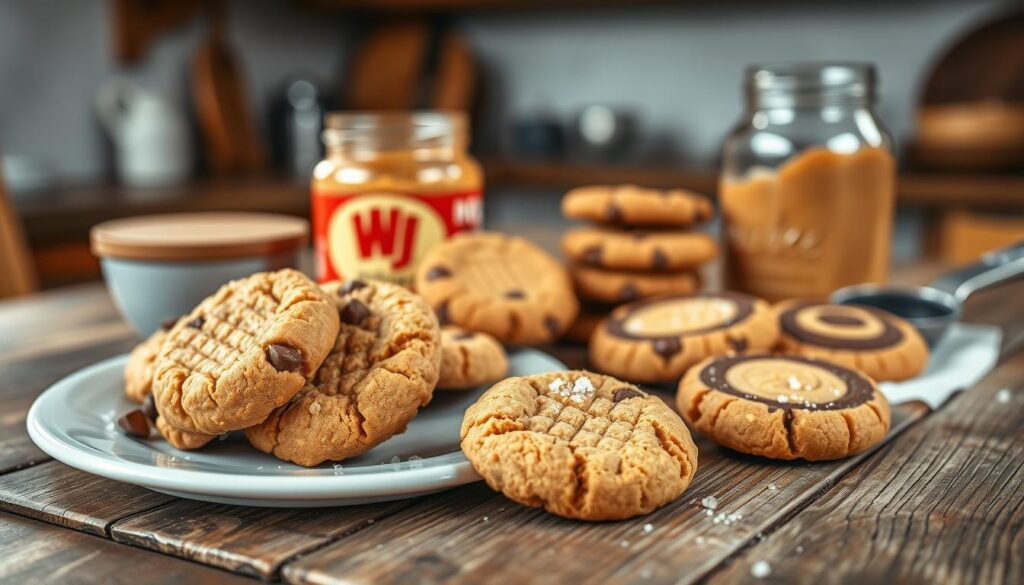
Adding chocolate chips or chopped chocolate to the dough is a great idea. Chocolate chips melt a bit, creating gooey pockets. Chopped chocolate, on the other hand, stays firm and adds a nice texture.
Peanut butter cookies with chocolate chips or chopped chocolate
To make cookies with chocolate chips, mix in one to one and a half cups of them. Choose semi-sweet for a balanced taste, dark for a deeper flavor, or milk chocolate for something sweeter.
For cookies with chopped chocolate, chill the dough first. This helps the cookies keep their shape. Chopped chocolate adds a unique look and different textures in every bite.
Peanut Butter Blossoms and stuffed cookie variations (Rolo, peanut butter cup)
Peanut butter blossoms are easy to make. Just press a Hershey’s Kiss into a warm cookie. The kiss melts a bit, creating a shiny center.
For stuffed cookies, wrap a Rolo or a mini peanut butter cup in dough. Chill the candy a bit so it stays in place while baking. Rolos add a caramel flavor, while peanut butter cups enhance the nutty taste.
Salted chocolate chip peanut butter cookies and other flavor pairings
Salted chocolate chip peanut butter cookies get a salty kick from flaky sea salt after baking. Sprinkle 3 to 4 flakes on each cookie while they cool.
Try adding chopped roasted peanuts for crunch or oats for chew. You can also swap some brown sugar for molasses or treacle to deepen the flavor. When adding mix-ins, bake for a bit less time or add a tablespoon of flour to keep the dough right.
- Tip: Roll dough in Demerara or sparkling sugar before baking for a crunchy, sparkly crust.
- Tip: If you stuff cookies, chill dough balls to prevent over-spread and leaking centers.
Special diets: gluten-free and vegan peanut butter cookies
You can make delicious peanut butter cookies for gluten-free or vegan diets. Just a few changes can make a big difference. Start with small swaps and test them in your oven to find the perfect mix.
How to handle gluten-free flours and binders
For gluten-free cookies, use a gluten-free all-purpose blend with xanthan gum. If you choose almond or oat flour, add 1/4–1/2 teaspoon xanthan gum per cup. This helps replace the structure gluten provides.
Gluten-free flours soak up moisture differently. You might need to adjust the flour or add a bit more liquid. A pinch of baking powder can also help with spread without changing the taste.
Vegan substitutions that work
To make vegan cookies, replace eggs with Ener-G or flax/chia “eggs”. Use 1 tablespoon ground flaxseed plus 3 tablespoons water for each egg. Applesauce can also work, but it makes cookies softer.
Use dairy-free butter like Earth Balance for the best results. Melted coconut oil changes the texture. Stick to natural peanut butter for the real taste.
Troubleshooting texture differences
Gluten-free and vegan cookies might be denser or less tender. If they’re too dense, try reducing flour or adding a bit more baking powder. This helps with lift.
Chilling the dough helps control spread with alternative fats. If cookies spread too much, chill them for 20–30 minutes. For thicker cookies, bake a bit longer at a lower temperature.
| Swap | Use | Effect on Texture | Quick Fix |
|---|---|---|---|
| All-purpose flour → GF blend | One-to-one gluten-free AP flour with xanthan gum | Similar crumb if blend contains binder; mild dryness possible | Reduce flour 1–2 tbsp; add 1 tbsp milk or dairy-free milk |
| Single gluten-free flour | Almond or oat flour + 1/4–1/2 tsp xanthan gum | Denser, shorter crumb; more moist with almond | Add 1/4 tsp baking powder; do not overpack flour |
| Egg → egg replacer | Ener-G or equivalent, or flax/chia egg | Less lift with flax; Ener-G gives consistent rise | Use Ener-G for crumb; add 1/8 tsp extra baking powder if needed |
| Dairy butter → dairy-free butter | Stick-style dairy-free butter (Earth Balance) | Most similar spread and texture when creamed | Cream thoroughly; chill dough if too soft |
| Dairy butter → coconut oil | Melted or solid coconut oil | Firmer at cool temps; different spread and chew | Use solid coconut oil and incorporate by creaming or reduce oven temp slightly |
Storage, freezing, and make-ahead tips for soft & chewy cookies
Store your peanut butter cookies in an airtight container at room temperature. Add a piece of white bread or a folded paper towel to keep them moist. This way, they stay soft for several days, perfect for snacks or lunchboxes.
To make cookies ahead of time, freeze them in an airtight bag or container. Freeze them flat in a single layer for the best texture. Then, stack them with parchment paper between each layer. Frozen cookies last 1–2 months and thaw quickly at room temperature.
Freeze cookie dough by portioning it on parchment-lined sheets and freezing until firm. Then, transfer the frozen pieces to an airtight container for easy portioning. You can also freeze larger dough logs for 4–6 weeks.
To bake from frozen, place dough balls on a parchment-lined sheet with space between. Preheat the oven fully and add one to two minutes to the usual bake time. This ensures a soft center and a set edge.
If dough was refrigerated or partially thawed, let it sit at room temperature for a few minutes before baking. Chilled dough makes thicker, less-spread cookies. Adjust baking time if the dough was very cold.
To reheat cookies, warm them in a 300°F oven for three to five minutes. Microwaving for 6–10 seconds can also restore chewiness. But, avoid overheating to prevent drying out. Let them rest for a minute after reheating to firm the center.
Let cookies cool on the baking sheet for about 20 minutes before transferring to a cooling rack. This helps set the soft centers and prevents breakage while storing or freezing.
Nutrition and calorie considerations for peanut butter cookies
When you bake or buy peanut butter cookies, the numbers vary with portion size and ingredients. A typical full-size cookie can run around 250 calories, while a smaller scoop may be near 130 calories. Track the calorie per cookie you expect before you bake so you can plan portions and snacks.
Approximate nutrition profile per cookie and recipe differences
Use the example nutrition to set expectations: about 253 kcal per cookie, 34 g carbs, 6 g protein, 11 g fat (2 g saturated), 166 mg sodium, 154 mg potassium, 1 g fiber, 19 g sugar, 36 mg calcium, and 1 mg iron. You will see big swings if you change scoop size, add chocolate, or swap peanut butter type.
Reducing sugar or fat: effects on texture and flavor
If you reduce sugar, cookies will spread less and brown less. Cut fat and the result is often drier and crumblier. To reduce sugar while keeping moisture, replace some white sugar with brown sugar. To reduce fat, try applesauce or mashed banana, but expect flavor and texture shifts.
Portion control tips and serving suggestions
Portion control cookies are easiest when you use a cookie scoop. A consistent scoop gives a predictable calorie per cookie and helps with meal planning. Try pairing a small cookie with a glass of milk or a piece of fruit for a balanced treat.
| Scenario | Typical calorie per cookie | Texture notes | Best serving suggestions |
|---|---|---|---|
| Standard recipe (full-size) | ~250–260 kcal | Soft, chewy when baked slightly under | One cookie with 8 oz skim milk or an apple |
| Small scoop cookie | ~120–140 kcal | Smaller, quicker bake; retains chew if not overbaked | Two cookies as afternoon snack with fruit |
| Reduce sugar peanut butter cookies | Depends on swap; often 10–20% fewer calories | Less browning and spread; use brown sugar to add moisture | One cookie with herbal tea; sprinkle sea salt flakes |
| Lower-fat substitutions | Varies; applesauce or banana cut fat but add carbs | Can be cakier or drier; short bake time helps | Serve warm with a berry to add freshness |
Keep peanut butter cookies nutrition in mind when adjusting recipes. Use portion control cookies to fit treats into your meal plan. Small swaps and mindful serving suggestions help you enjoy flavor while managing calories and texture.
Conclusion
This easy peanut butter cookies recipe is a sure hit every time. It uses simple ingredients and a few key steps. First, cream the ingredients well. Then, scoop the dough and roll it in sugar.
Bake until the cookies are just set. Let them cool on the baking sheet for about 20 minutes. This helps them stay soft in the center.
For the best results, pick a consistent peanut butter like Jif or Skippy. Santa Cruz offers a more natural choice. You can also try adding baking soda or baking powder for extra flavor.
Adding chocolate chips or chopped chocolate is a great idea. Just be sure to bake them briefly to keep them chewy. This way, your cookies will be soft and delicious.
To keep your cookies fresh, store them in an airtight container at room temperature. Or, freeze the dough balls for later. Remember, the size of your cookies affects their calorie count. By following these tips, you’ll make homemade peanut butter cookies that everyone will love.